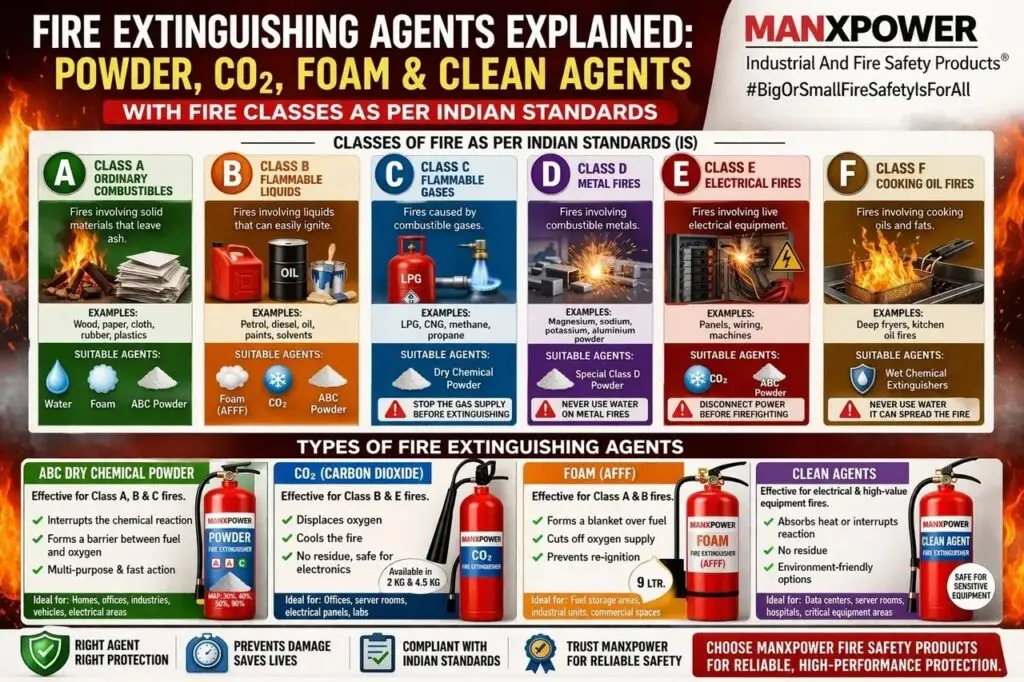
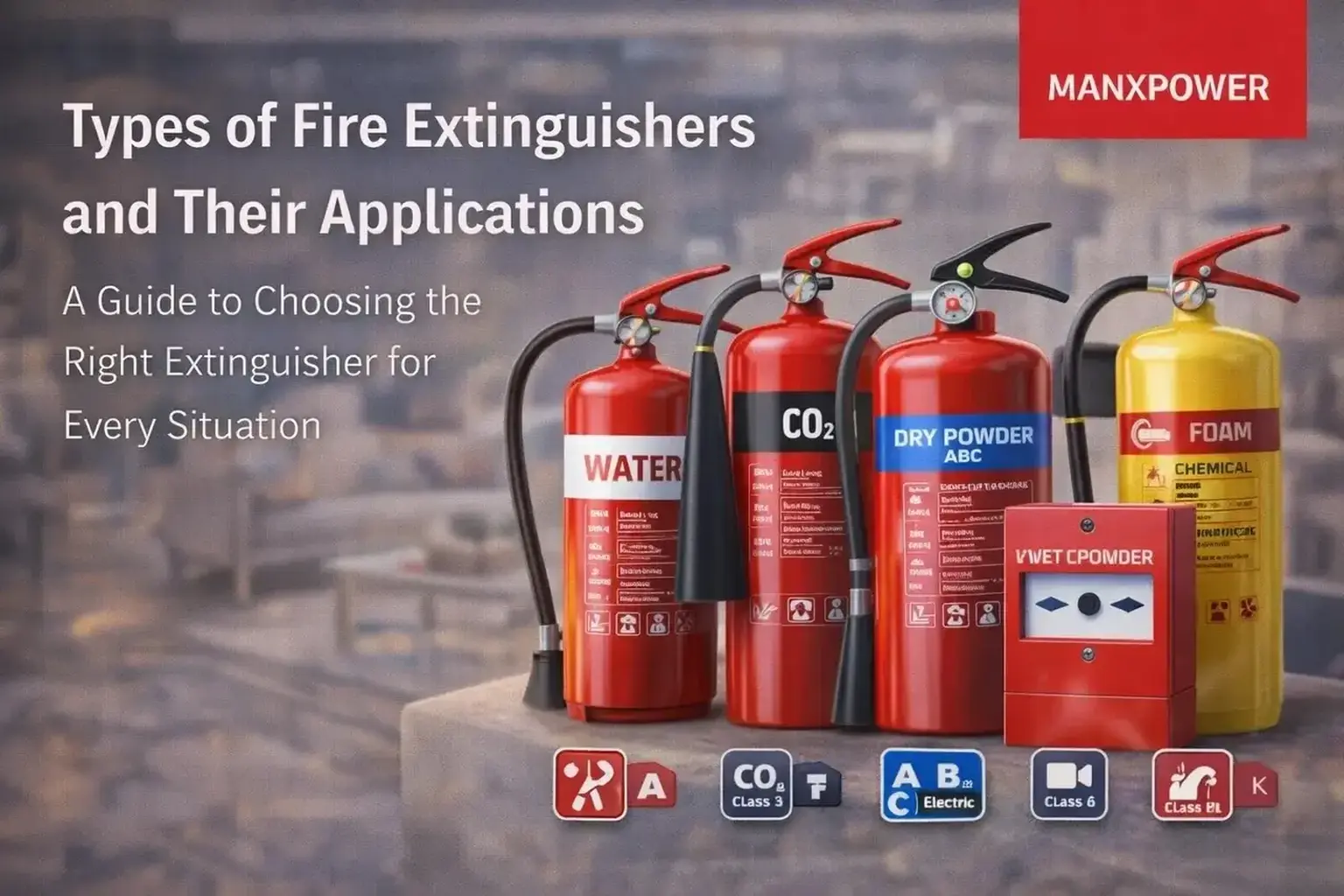
There are six commonly discussed types of fire extinguishers: water, foam, CO₂, ABC dry powder, wet chemical and clean agent. Each suits specific fire risks, and using the wrong one can be ineffective or dangerous. Water mist and Class D extinguishers are specialised types with their own uses.
If a fire is spreading, leave the building and call 101 (fire) or 112 (national emergency number). Use an extinguisher only on a small fire, when you have been trained and a clear exit is behind you.
What Are the Fire Classes?
Fire extinguishers are designed for different types of fire. Knowing the class helps you pick the right one.
| Class | Fuel | Examples |
| A | Solid combustibles | Wood, paper, cloth and certain plastics |
| B | Flammable liquids | Petrol, diesel, paint and solvents |
| C | Flammable gases | LPG, propane and methane |
| D | Combustible metals | Magnesium and aluminium |
| F (called K in the US) | Cooking oils and fats | Commercial kitchen fryers |
| Electrical risk | Not a separate fire class in India | Electrical panels, wiring and servers |
Fire classes differ between countries. In India, Class C means flammable gases. In the US, Class C means fires involving electrical equipment. In India, the fire class depends on the material burning, so isolate the power supply first if it is safe to do so. Always check the extinguisher label and the maker’s instructions.
What Are the 6 Types of Fire Extinguishers and Their Uses?
1. Water Fire Extinguishers (Class A)
Water extinguishers cool burning materials and help prevent re-ignition.
- Best for: Wood, paper, cardboard and cloth.
- Install in: Homes, offices, schools and warehouses.
- Advantages: Effective cooling and no powder residue.
- Avoid: Electrical equipment, flammable liquids and cooking oil fires.
- Related: Water mist extinguishers discharge fine droplets. Check the label for the fire classes the unit is rated for.
2. Foam Fire Extinguishers (Class A and B)
Foam forms a blanket over burning fuel, cutting off oxygen and suppressing flammable vapours.
- Best for: Petrol, paint, solvents and suitable solid combustibles.
- Install in: Petrol pumps, workshops, storage areas and commercial premises.
- Advantages: Helps prevent re-ignition of flammable-liquid fires.
- Avoid: Cooking oil fires and live electrical equipment, unless the specific model is approved for that use.
3. CO₂ Fire Extinguishers (Class B and Electrical Risks)
Carbon dioxide (CO₂) extinguishers displace oxygen around the fire and leave no powder or foam residue.
- Best for: Flammable-liquid fires and suitable electrical equipment.
- Install in: Server rooms, electrical panels, offices and equipment areas.
- Advantages: Nothing to clean up after use.
- Avoid: Relying on CO₂ alone for deep-seated Class A fires, which may smoulder and restart. In a small enclosed room, discharge and leave, because CO₂ reduces oxygen and the horn becomes very cold.
- Compare: ABC vs CO₂: Which One Do You Need?
4. ABC Dry Powder Fire Extinguishers (Class A, B and C)
ABC dry powder is one of the most versatile portable extinguishers used in India. Rated models cover Class A, B and C fires, so one unit suits mixed risks.
- Best for: Areas with solids, liquids and gases together.
- Install in: Offices, shops, vehicles, commercial buildings and factories.
- Advantages: Covers several common fire classes with one extinguisher.
- Avoid: Cooking oil fires, and sensitive electronics where powder residue can cause damage and reduce visibility indoors.
- Electrical safety: Use near electrical equipment only if the maker’s instructions allow it, and isolate the power first if it is safe.
- Browse: MANXPOWER ABC Fire Extinguishers
5. Wet Chemical Fire Extinguishers (Class F, and Class A on Some Models)
Wet chemical extinguishers are made for cooking oil and fat fires. The agent cools the burning oil and forms a soapy layer that helps prevent re-ignition.
- Best for: Cooking oil and fat fires.
- Install in: Restaurants, commercial kitchens, hotels and food courts.
- Advantages: Cools the oil and helps stop re-ignition.
- Avoid: Live electrical equipment, unless the specific model is approved for that use.
- Read next: How to Put Out a Cooking Oil Fire
6. Clean Agent Fire Extinguishers (Sensitive Equipment and Electrical Risks)
Clean agent extinguishers use electrically non-conductive agents that suppress fire without leaving powder or foam residue. Agents and fire ratings vary, so check the label before you buy.
- Best for: Sensitive equipment and electrical risks.
- Install in: Data centres, laboratories and telecom rooms.
- Advantages: Non-conductive agent and no powder or foam residue.
- Check the label: Larger units may carry more fire-class ratings than small ones.
- More detail: Fire Extinguishing Agents Compared
What About Class D Metal Fires?
None of the six types above should be assumed suitable for Class D metal fires. Combustible metals such as magnesium need a special agent made for the metal involved. Do not use ordinary ABC powder or general-purpose extinguishers unless the product is specifically approved for that metal fire. See our fire extinguishing agents.
Fire Extinguisher Types at a Glance
| Extinguisher Type | Fire Classes / Uses | Avoid or Check |
| Water | Class A | Electrical equipment, flammable liquids and cooking oil |
| Foam | Class A and B | Cooking oil and live electrical equipment |
| CO₂ | Class B and suitable electrical risks | Deep-seated Class A fires and small enclosed rooms |
| ABC Dry Powder | Class A, B and C | Cooking oil and sensitive electronics |
| Wet Chemical | Class F; some models also Class A | Live electrical equipment unless approved |
| Clean Agent | Sensitive equipment; classes stated on the label | Check the individual product rating |
How Do You Choose the Right Fire Extinguisher?
Choose by the fire risks in your building, the materials present and the equipment you need to protect.
- Identify the main fire risk: solids, flammable liquids, gases, cooking oils, electrical equipment or combustible metals.
- Match the extinguisher type: the rated fire classes must fit the risks you found.
- Consider the area size: pick the capacity and quantity to suit the layout and a fire risk assessment.
- Check the markings: look for the ISI mark, the BIS licence number and IS 15683:2018 on the label.
- Plan regular servicing: read our Fire Extinguisher Maintenance Guide and explore Fire Extinguisher Spare Parts.
For a house, see Home Fire Extinguisher: Type, Size and Placement. For electrical hazards, read Electrical Fire Safety. A professional fire risk assessment gives the right types, quantities and locations for your premises.
Why Choose MANXPOWER Fire Extinguishers?
MANXPOWER provides fire safety products for commercial and industrial needs.
- ISI-marked fire extinguishers.
- ISO 9001:2015 certified company.
- Supplying fire safety products from New Delhi since 2015.
- Water, foam, CO₂ and ABC fire extinguishers.
Explore the MANXPOWER Fire Extinguisher Range or contact the team for product information.
Phone: +91 11 4987 2937
Email: info@manximpex.com
Business hours: Monday–Saturday, 10:30 AM–5:00 PM
Location: New Delhi, India
Standards and guidance referred to: BIS (IS 15683:2018), NFPA and CCOHS.
Frequently Asked Questions
What are the main types of fire extinguishers?
There are six commonly discussed types covered in this guide: water, foam, CO₂, ABC dry powder, wet chemical and clean agent. Shorter lists often show four (water, foam, CO₂ and dry powder) or five (adding wet chemical). Other specialised types include water mist and Class D extinguishers.
What is the most common type of fire extinguisher?
ABC dry powder is widely used in India because rated models cover Class A, B and C fires. It can also be used around electrical equipment when the manufacturer’s instructions permit it. Isolate the power supply first if it is safe to do so.
Is there a fire extinguisher for metal (Class D) fires?
Yes. Class D fires need a special dry powder agent designed for combustible metals. Ordinary ABC powder and general-purpose extinguishers should not be assumed suitable.
Can one extinguisher handle every fire?
No. Different fires require different extinguishing agents. Install a combination of extinguishers based on your premises’ fire risk profile and applicable safety requirements.