Opening a Commercial Building? Don’t Let Fire NOC Be an Afterthought
Imagine this. You’ve spent months planning your new office, warehouse, factory, or retail space. The interiors are complete, the furniture has arrived, your team is ready to move in, and you’re finally counting down to opening day.
Then someone asks, “Have you received the Fire NOC?”
For many business owners, that’s when the real questions begin.
What exactly is a Fire NOC? Is it mandatory? Which documents do you need? More importantly, what fire safety equipment should already be installed before the Fire Department arrives for inspection?
The truth is, obtaining a Fire NOC for a commercial building isn’t just about filling out forms or paying government fees. The Fire Department wants to ensure that if a fire breaks out tomorrow, the people inside your building have a safe way to evacuate and the installed fire protection systems are capable of controlling the situation until emergency responders arrive.
This is where many businesses make mistakes. They focus on the application process but overlook the equipment that inspectors actually check during their visit. A missing smoke detector, an expired fire extinguisher, or a non-functional fire alarm system can delay approval, even if every document is in order.
In this guide, we’ll walk you through everything you need to know—from the fire NOC requirements in India and eligibility criteria to the mandatory fire safety equipment, required documents, common reasons applications are rejected, and practical tips to help your building remain compliant long after the certificate is issued.
Whether you’re constructing a new commercial property or upgrading an existing one, this guide will help you approach the process with confidence.
What is Fire NOC and Why It’s Mandatory
A Fire No Objection Certificate (Fire NOC) is an approval issued by the State Fire Department after confirming that a building complies with the applicable fire safety regulations.
Think of it as an official confirmation that your building has the necessary fire protection measures in place to reduce the risk to people and property in the event of a fire.
Although the exact process differs from one state to another, the purpose remains the same across India: ensuring that commercial buildings are equipped to prevent fires, detect them early, and allow occupants to evacuate safely if an emergency occurs.
For many commercial properties, a Fire NOC is required before authorities issue an Occupancy Certificate or allow businesses to begin operations. It also demonstrates that the building has been designed and equipped according to relevant fire safety standards, including applicable provisions of the National Building Code (NBC) of India and local Fire Department guidelines.
Is Fire NOC Mandatory?
One of the most common questions business owners ask is, “Is Fire NOC mandatory?”
In many cases, yes.
Commercial buildings, factories, warehouses, hotels, educational institutions, hospitals, shopping malls, and several other categories of buildings are required to obtain a Fire NOC before they can legally operate. The exact requirement depends on factors such as:
- Building occupancy
- Building height
- Built-up area
- Nature of business
- Applicable state regulations
For example, the fire norms for commercial building may differ slightly between Delhi, Maharashtra, Karnataka, or other states. That’s why it’s always advisable to verify the latest requirements with your local Fire Department.
What Happens If You Don’t Have a Fire NOC?
Some business owners mistakenly believe they can obtain the certificate later, after operations have started. In reality, operating without the required approval can create several problems.
Depending on the applicable regulations, businesses may face:
- Delays in receiving occupancy or operating approvals.
- Notices or penalties from local authorities.
- Temporary suspension of business operations.
- Difficulties in obtaining or renewing insurance coverage.
- Increased liability if a fire-related incident occurs.
More importantly, the absence of a Fire NOC may indicate that critical fire safety systems have not been properly installed or tested. That puts employees, customers, and visitors at unnecessary risk.
Rather than viewing the Fire NOC as another regulatory requirement, it’s better to see it as an investment in workplace safety. The process encourages businesses to identify fire risks early and install the right systems before an emergency ever occurs.
Who Needs Fire NOC? (Eligibility Criteria)
Not every building requires the same level of fire protection, which is why Fire NOC requirements vary depending on the type of property.
The fire NOC eligibility criteria in India generally consider factors such as:
- Occupancy type
- Total built-up area
- Building height
- Number of floors
- Nature of activities carried out inside the building
- Applicable state fire regulations
Many people also search for the minimum height of building for Fire NOC. While the National Building Code provides guidance for high-rise buildings, the actual requirement depends on your state’s Fire Department and local building regulations. Instead of relying on a single height limit, it’s always best to verify the latest rules applicable to your project.
Buildings That Commonly Require a Fire NOC
Although requirements vary across states, Fire NOCs are commonly required for:
- Commercial office buildings
- Factories and manufacturing units
- Warehouses and logistics centres
- Shopping malls and retail complexes
- Hotels and guest houses
- Restaurants and banquet halls
- Hospitals and healthcare facilities
- Schools, colleges, and educational institutions
- Cinema halls and entertainment venues
- High-rise residential buildings where applicable
- Mixed-use commercial developments
If you’re planning Fire NOC for construction, it’s worth involving a fire safety consultant or supplier during the design stage. Installing fire protection systems after construction is complete is usually more expensive and can delay project approvals.
Planning ahead also ensures that fire alarm systems, hydrant pipelines, sprinkler networks, emergency exits, and firefighting equipment are integrated into the building rather than added as an afterthought.
Fire Safety Equipment Required for NOC Approval
Here’s something many legal guides don’t explain in detail.
Submitting the application is only one part of the process. During inspection, Fire Department officials want to see whether the building is actually capable of responding to a fire emergency.
That means checking much more than paperwork.
Inspectors typically verify whether the required fire safety equipment has been installed correctly, whether it’s functional, and whether it has been maintained according to applicable standards.
If even one critical system isn’t working properly, approval may be delayed until the deficiencies are rectified.
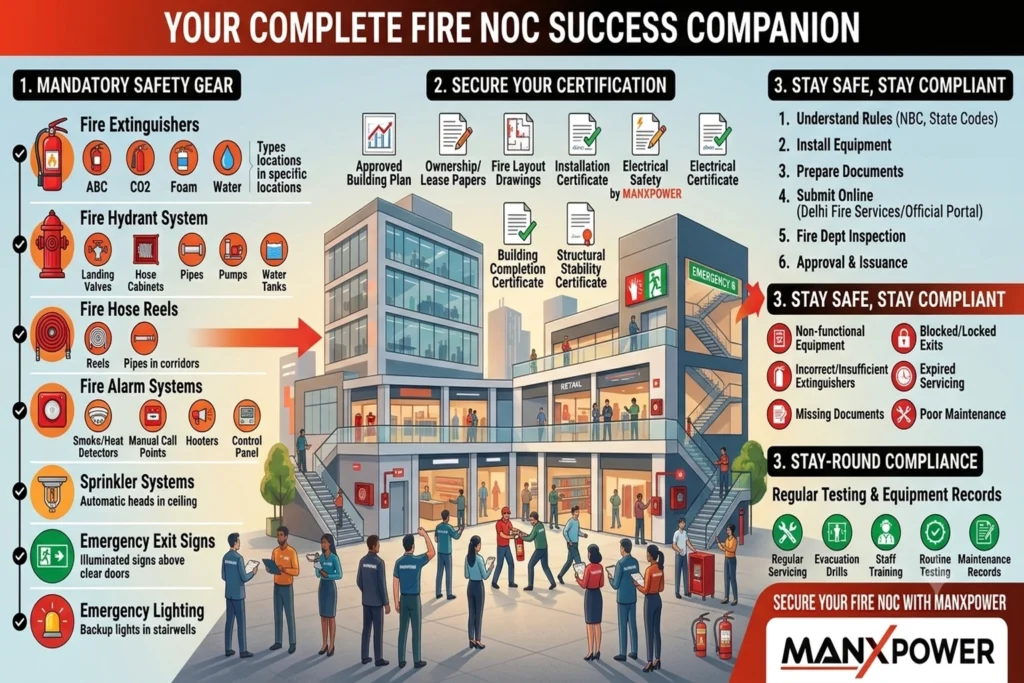
Let’s look at the major systems commonly required.
Fire Extinguishers
Walk into any commercial building and you’ll probably notice fire extinguishers mounted near entrances, staircases, corridors, or electrical rooms.
They’re easy to ignore during normal operations, but during an inspection they’re one of the first things officials check.
Inspectors don’t simply verify that extinguishers are present. They also look at:
- Whether the correct type has been installed.
- Whether enough extinguishers have been provided.
- Whether they’re easily accessible.
- Whether servicing and refilling are up to date.
- Whether pressure indicators and safety seals are intact.
Different workplaces require different types of extinguishers depending on the fire risks involved.
For example:
- ABC Dry Powder Fire Extinguishers are commonly used in offices, warehouses, and commercial buildings because they can handle multiple classes of fire.
- CO₂ Fire Extinguishers are suitable near electrical panels, server rooms, and electrical equipment because they leave no residue.
- Foam Fire Extinguishers are often used where flammable liquids are present.
- Water Fire Extinguishers are generally suitable for ordinary combustible materials such as paper and wood where electrical hazards are not present.
Choosing the correct extinguisher is just as important as installing one.
At MANXPOWER, we supply a wide range of fire extinguishers designed for commercial, industrial, and institutional applications, helping businesses select equipment that matches their specific fire risks.
Fire Hydrant Systems & Landing Valves
For larger commercial buildings, factories, warehouses, hotels, and high-rise developments, portable fire extinguishers alone are rarely enough. That’s where a fire hydrant system becomes essential.
A fire hydrant system provides firefighters with a reliable water supply to tackle larger fires. During a Fire NOC inspection, officials don’t just check whether the system exists—they also verify that it’s installed correctly, easily accessible, and ready to use.
A typical hydrant system may include:
- Landing Valves
- Hydrant Valves
- Fire Hose Cabinets
- Branch Pipes
- Hose Pipes
- Water storage tanks
- Fire pumps
If any of these components are missing or not functioning properly, it could delay the approval process.
MANXPOWER supplies a complete range of hydrant system components designed for commercial and industrial buildings, helping businesses meet their fire protection requirements with confidence.
Read more: Landing Valves: A Critical Component of Fire Hydrant Systems
Fire Hose Reels & Fire Hose Pipes
Fire hose reels are another important part of many commercial fire protection systems.
Unlike portable extinguishers, which contain a limited amount of extinguishing agent, hose reels provide a continuous supply of water, making them suitable for controlling certain types of fires before they spread.
During an inspection, officials may check:
- Whether hose reels are installed in the correct locations.
- Whether they can be accessed easily.
- Whether the hose is free from damage.
- Whether water pressure is adequate.
- Whether operating instructions are clearly visible.
Routine inspections and maintenance are just as important as the initial installation.
MANXPOWER offers durable Fire Hose Reels and Fire Hose Pipes suitable for offices, factories, warehouses, shopping complexes, and other commercial buildings.
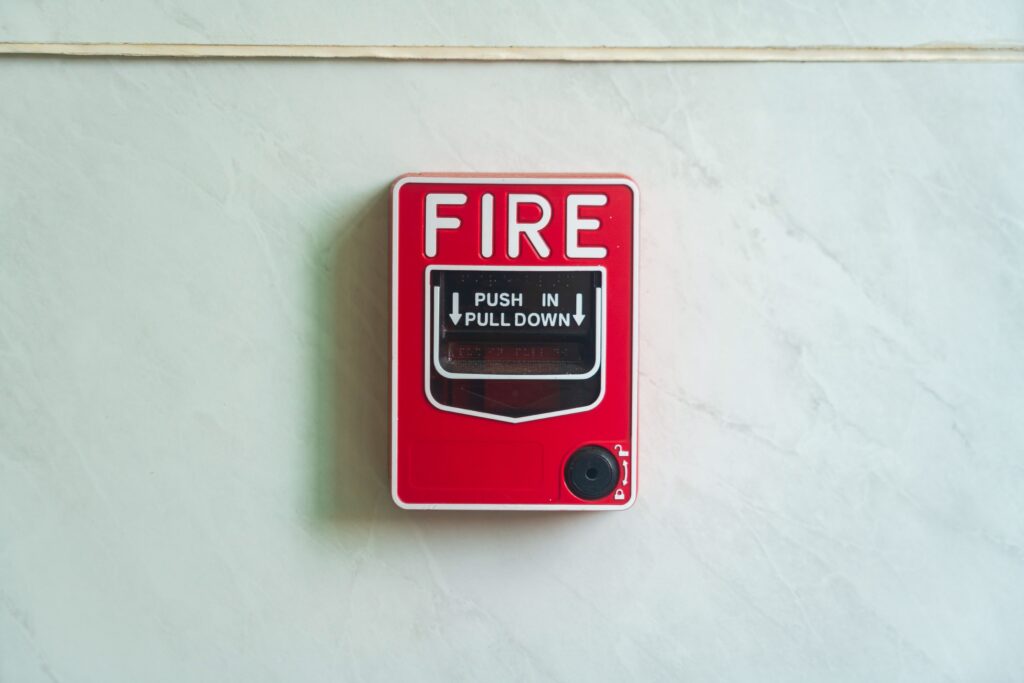
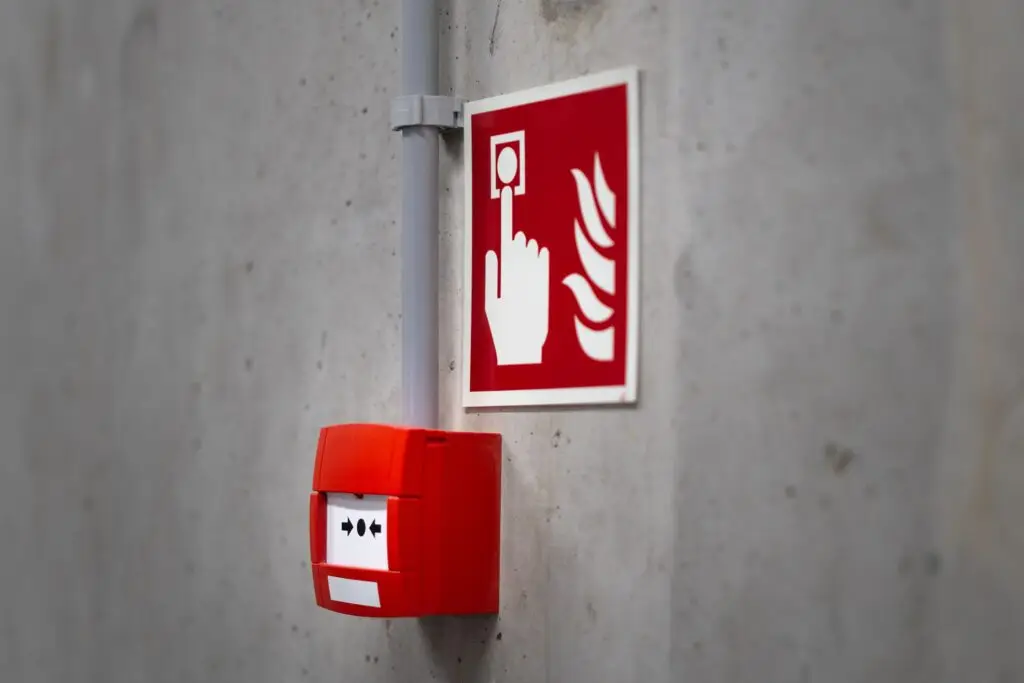
Fire Alarm Systems
A fire can spread surprisingly quickly, which is why early detection is critical.
An effective fire alarm system alerts occupants before smoke or flames make evacuation difficult. In many commercial buildings, it is one of the first systems inspected during the Fire NOC process.
Depending on the size and complexity of the building, you may require either:
- Conventional Fire Alarm Systems
- Addressable Fire Alarm Systems
These systems typically work alongside:
Together, these devices help detect a fire, notify occupants, and support a faster emergency response.
When planning a new installation, it’s important to select equipment that suits your building’s occupancy and fire risks rather than simply choosing the lowest-cost option.
Read more: How to Choose the Right Fire Alarm System
Fire Sprinkler Systems
Imagine a fire breaking out in a warehouse late at night when nobody is around.
Without automatic protection, the fire may continue growing until emergency services arrive. A sprinkler system helps reduce that risk by activating automatically when exposed to heat.
Contrary to popular belief, sprinklers don’t all activate at once. Usually, only the sprinkler heads exposed to sufficient heat operate, helping control the fire while minimizing unnecessary water discharge.
Many larger commercial buildings require sprinkler systems under applicable fire safety regulations.
MANXPOWER supplies sprinkler system components suitable for offices, warehouses, industrial buildings, hospitals, hotels, educational institutions, and other commercial properties.
Read more: How Fire Sprinkler Systems Work
Emergency Exit Signs & Emergency Lighting
During a fire, visibility can quickly become poor because of smoke or a power failure.
That’s why emergency lighting and illuminated exit signs are so important.
They help occupants locate escape routes quickly, even if the building loses electrical power.
Inspectors generally verify that:
- Exit signs are clearly visible.
- Emergency lights function correctly.
- Escape routes remain unobstructed.
- Staircases are properly illuminated.
These may seem like small details, but they can make a significant difference during an emergency evacuation.
Documents Required for Fire NOC Application
Once your fire protection systems are in place, the next step is preparing your documentation.
Although the fire NOC documents required in India differ slightly from one state to another, most applicants are asked to provide a similar set of documents.
These commonly include:
- Approved building plan.
- Ownership documents or lease agreement.
- Fire safety layout drawings.
- Firefighting equipment installation certificate.
- Electrical safety certificate.
- Building completion certificate (where applicable).
- Structural stability certificate, if required.
- Occupancy details.
- Identity proof of the applicant.
- Any additional documents requested by the concerned State Fire Department.
Before submitting your application, it’s worth reviewing every document carefully. A missing certificate or outdated drawing can delay the inspection even if the building is otherwise compliant.
How to Apply for Fire NOC
Many people search online for how to apply for Fire NOC, expecting a complicated legal process. While the exact procedure varies by state, the overall process is fairly straightforward when planned properly.
Step 1: Understand the Requirements
Start by identifying the fire safety requirements applicable to your building.
These depend on factors such as occupancy type, building height, built-up area, and local Fire Department regulations.
If you’re still in the construction phase, planning early is always beneficial. Designing fire safety systems into the building is far easier than making changes later.
Step 2: Install the Required Fire Safety Equipment
This is often the most important stage.
Before submitting an application, ensure the required fire protection systems have been installed and tested.
Depending on your building, this may include:
- Fire Extinguishers
- Fire Alarm System
- Smoke Detectors
- Heat Detectors
- Fire Hydrant System
- Fire Hose Reels
- Sprinkler System
- Emergency Exit Signs
- Emergency Lighting
Choosing reliable equipment from trusted manufacturers such as MANXPOWER helps ensure the systems perform as expected during inspection and in real emergencies.
Step 3: Prepare Your Documentation
Collect all drawings, certificates, and supporting documents before applying.
It’s a good idea to verify that installation certificates match the equipment installed on-site. Small discrepancies can result in additional queries from the inspecting authority.
Step 4: Submit the Application
Many State Fire Departments now allow applicants to complete the Fire NOC for commercial building online through their official portals.
Businesses located in the capital can also explore the online application for Fire NOC Delhi through the Delhi Fire Services website.
If you’re applying for a Fire NOC for commercial building in Delhi, always refer to the latest guidelines issued by Delhi Fire Services, as procedures and documentation requirements may be updated from time to time.
Step 5: Fire Department Inspection
After your application has been reviewed, Fire Department officials will usually schedule an on-site inspection.
During this visit, they may verify:
- Installed firefighting equipment.
- Fire alarm systems.
- Smoke detection systems.
- Emergency exits.
- Exit signage.
- Fire hydrant systems.
- Sprinkler systems.
- Maintenance records.
- Accessibility of firefighting equipment.
Think of this inspection as a practical verification rather than just a paperwork exercise.
Step 6: Approval and Issuance
If your building satisfies the applicable fire safety requirements and no deficiencies are found during inspection, the Fire Department issues the Fire NOC.
If certain issues are identified, you’ll usually be given an opportunity to rectify them before a follow-up inspection is conducted.
Preparing properly before the inspection can save considerable time and help avoid unnecessary delays.
Common Reasons Fire NOC Applications Get Rejected
One of the biggest misconceptions about a Fire NOC is that once you’ve submitted the application, approval is almost guaranteed.
In reality, many applications are delayed or rejected because of issues that could have been identified much earlier. In most cases, it isn’t a major design flaw that causes the problem—it’s a series of small oversights.
Here are some of the most common reasons why businesses don’t receive approval on their first inspection.
1. Fire Safety Equipment Isn’t Working
Installing fire protection equipment is only half the job. It also needs to be functional.
Inspectors may test fire alarm systems, smoke detectors, emergency lights, hydrant systems, and other equipment during the site visit. If any system fails to operate correctly, you’ll likely be asked to rectify the issue before the Fire NOC can be issued.
Routine maintenance goes a long way in preventing these problems.
2. Incorrect or Insufficient Fire Extinguishers
It’s surprisingly common to find the wrong type of extinguisher installed in the wrong location.
For example, using a water fire extinguisher near electrical panels creates a safety risk, while relying on a single extinguisher to protect a large warehouse is rarely sufficient.
Inspectors look at factors such as:
- Type of extinguisher.
- Quantity installed.
- Accessibility.
- Service status.
- Pressure condition.
- Installation height.
Choosing the correct equipment from the beginning saves both time and money.
3. Blocked or Inadequate Emergency Exits
Emergency exits are designed to help people leave a building quickly and safely.
Unfortunately, they are sometimes blocked by stored materials, locked from the inside, or poorly marked.
During an inspection, officials may verify that:
- Exit routes remain unobstructed.
- Doors open correctly.
- Exit signs are clearly visible.
- Emergency lighting is operational.
Even if the rest of your fire protection systems meet the requirements, blocked exits can delay approval.
4. Incomplete Documentation
Paperwork matters too.
Applications are often delayed because important documents are missing or outdated.
Common examples include:
- Missing fire safety drawings.
- Expired certificates.
- Incorrect building plans.
- Missing ownership documents.
- Installation certificates that don’t match the equipment installed on-site.
Reviewing your documentation carefully before submitting the application can prevent unnecessary delays.
5. Poor Maintenance of Fire Protection Systems
Fire safety equipment needs regular inspection and maintenance.
An expired fire extinguisher, a damaged hose reel, or a non-functional smoke detector may appear to be a minor issue, but during a Fire Department inspection, it can become a reason for rejection.
A simple preventive maintenance schedule helps ensure everything remains in working condition throughout the year.
Read more: Types of Fire Extinguishers and Their Applications
How to Stay Fire NOC Compliant Throughout the Year
Receiving a Fire NOC is an important milestone, but it’s not the end of your fire safety responsibilities.
Buildings change over time. Offices expand, machinery is replaced, storage layouts are modified, and employees come and go. Unless fire protection systems are maintained regularly, a building that was fully compliant a year ago may no longer meet the required safety standards.
The easiest way to avoid future issues is to treat fire safety as an ongoing process rather than a one-time project.
Here are a few best practices that every business should follow:
- Service fire extinguishers at the recommended intervals.
- Test fire alarm systems regularly.
- Inspect smoke and heat detectors.
- Check fire hose reels and hydrant systems for leaks or damage.
- Ensure emergency exit signs and lighting remain operational.
- Conduct regular evacuation drills.
- Train new employees in basic fire safety procedures.
- Keep maintenance and inspection records organised.
- Replace damaged or outdated equipment promptly.
Businesses operating in Delhi should also keep track of Fire NOC renewal Delhi requirements and complete the renewal process within the prescribed timelines where applicable.
Regular maintenance doesn’t just help with compliance—it also ensures your fire protection systems are ready to perform when they’re needed most.
At MANXPOWER, we work with businesses across offices, factories, warehouses, hotels, educational institutions, and commercial buildings by supplying dependable fire safety equipment that supports long-term compliance and workplace safety.
Secure Your Fire NOC with the Right Fire Safety Equipment
Obtaining a Fire NOC for commercial building is about much more than satisfying a regulatory requirement. It’s about creating a workplace where employees, customers, and visitors can feel safe every day.
While documentation and approvals are important, the real foundation of fire safety lies in installing the right equipment, maintaining it properly, and ensuring it’s ready to perform in an emergency. A well-designed fire protection system doesn’t just help during inspections—it protects your business when it matters most.
Whether you’re developing a new commercial property, expanding a factory, setting up a warehouse, or upgrading an existing office, choosing reliable fire safety equipment from the beginning can save time, reduce compliance issues, and improve overall safety.
At MANXPOWER, we supply a complete range of fire protection solutions for commercial and industrial buildings, including:
- Fire Extinguishers
- Fire Hose Reels
- Fire Hose Pipes
- Fire Hydrant System Components
- Landing Valves
- Branch Pipes
- Fire Alarm Systems
- Smoke Detectors
- Heat Detectors
- Fire Alarm Control Panels
- Sprinkler System Components
- Emergency Exit Signs
- Hooters and Strobes
Every building is different, which is why our team helps customers select products that match their occupancy, fire risks, and project requirements.
If you’re planning to apply for a Fire NOC, upgrade your existing fire protection systems, or simply want to ensure your building is prepared for inspection, MANXPOWER is here to help with dependable products and practical guidance every step of the way.
Frequently Asked Questions
What fire safety equipment is mandatory for Fire NOC?
The required equipment depends on the type, size, and occupancy of the building. Common requirements include fire extinguishers, fire alarm systems, smoke detectors, heat detectors, fire hydrant systems, fire hose reels, sprinkler systems, emergency exit signs, and emergency lighting. Your local Fire Department will determine the exact requirements for your property.
How long is a Fire NOC valid for?
The validity of a Fire NOC varies depending on the state and the type of building. Some occupancies require periodic renewal, while others may have different compliance requirements. It's always advisable to confirm the validity period with the concerned State Fire Department.
Is it legal to run a business without a Fire NOC?
If your building falls under categories where a Fire NOC is mandatory, operating without one may lead to penalties, delays in obtaining other approvals, insurance complications, or action by the relevant authorities. Businesses should always verify the applicable legal requirements before commencing operations.
Why do Fire NOC applications get rejected?
Applications are commonly rejected because of non-functional fire protection systems, blocked emergency exits, expired fire extinguishers, incomplete documentation, poorly maintained equipment, or installations that don't comply with approved drawings or applicable regulations.
What is the process for Fire NOC renewal?
The renewal process generally involves submitting the prescribed application, ensuring all fire protection systems remain functional, updating any required documents, and completing inspections if requested by the Fire Department. The exact procedure may differ between states.
What documents are required for Fire NOC application?
Typical documents include approved building plans, ownership or lease documents, fire safety drawings, installation certificates for firefighting equipment, electrical safety certificates, occupancy details, and any additional documents specified by the concerned Fire Department.
What is the minimum height of a building for Fire NOC?
There isn't a single nationwide height requirement. The minimum height of a building for Fire NOC depends on the applicable provisions of the National Building Code (NBC) and the regulations issued by the relevant State Fire Department. Building use and occupancy are also important factors.
Can I apply for Fire NOC online?
Yes. Many State Fire Departments have introduced online portals where applicants can submit documents and track their applications. Businesses located in Delhi can use the Delhi Fire Services portal for the online application for Fire NOC Delhi, subject to the latest procedures and eligibility criteria.