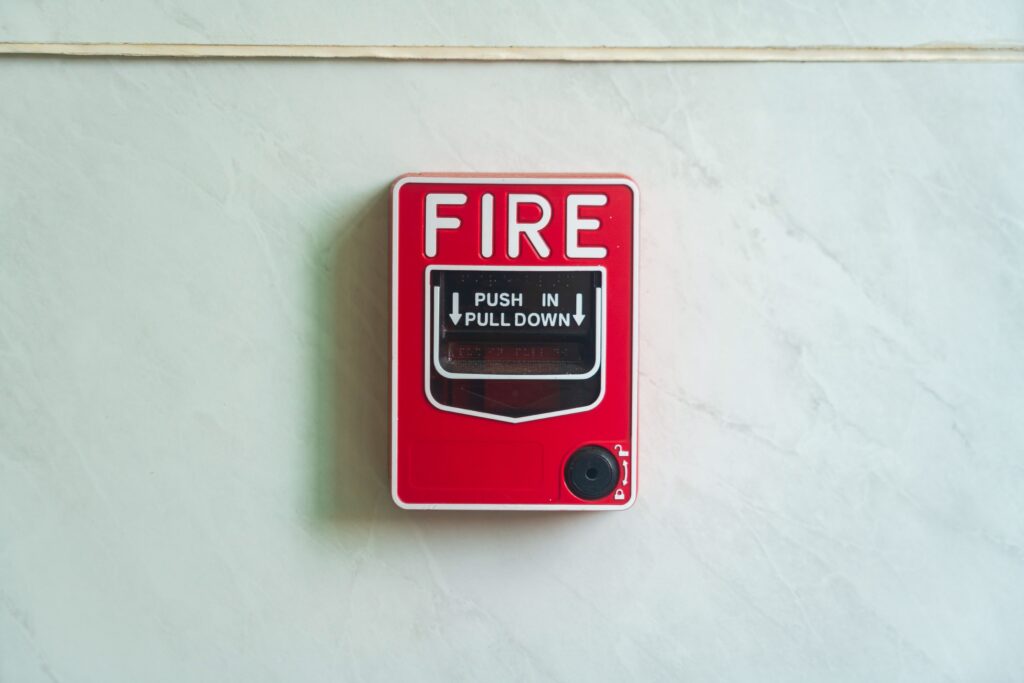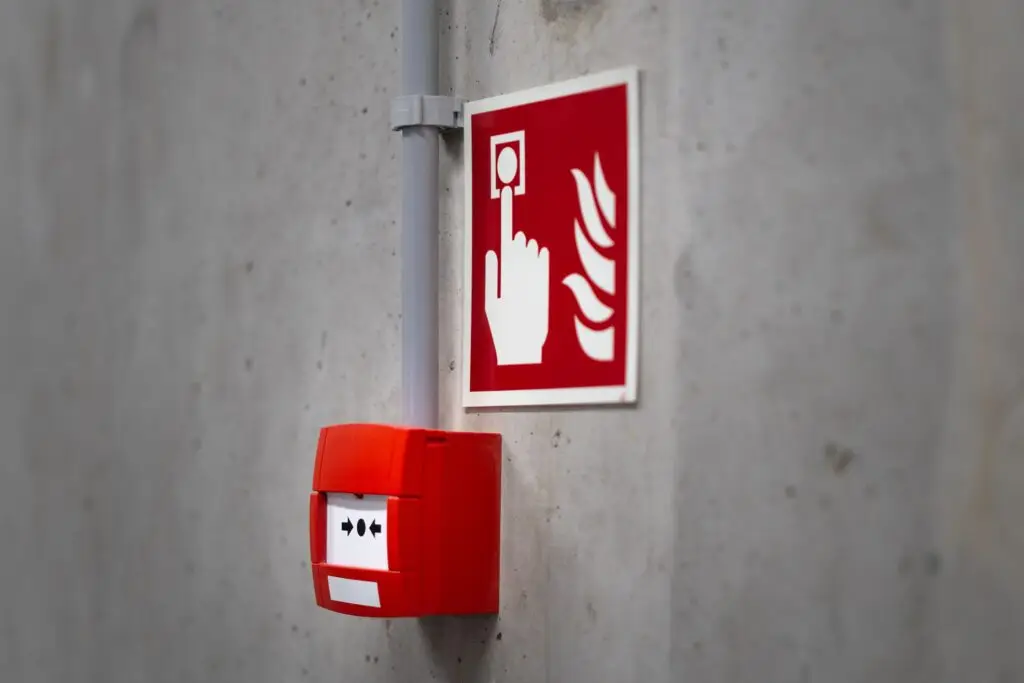
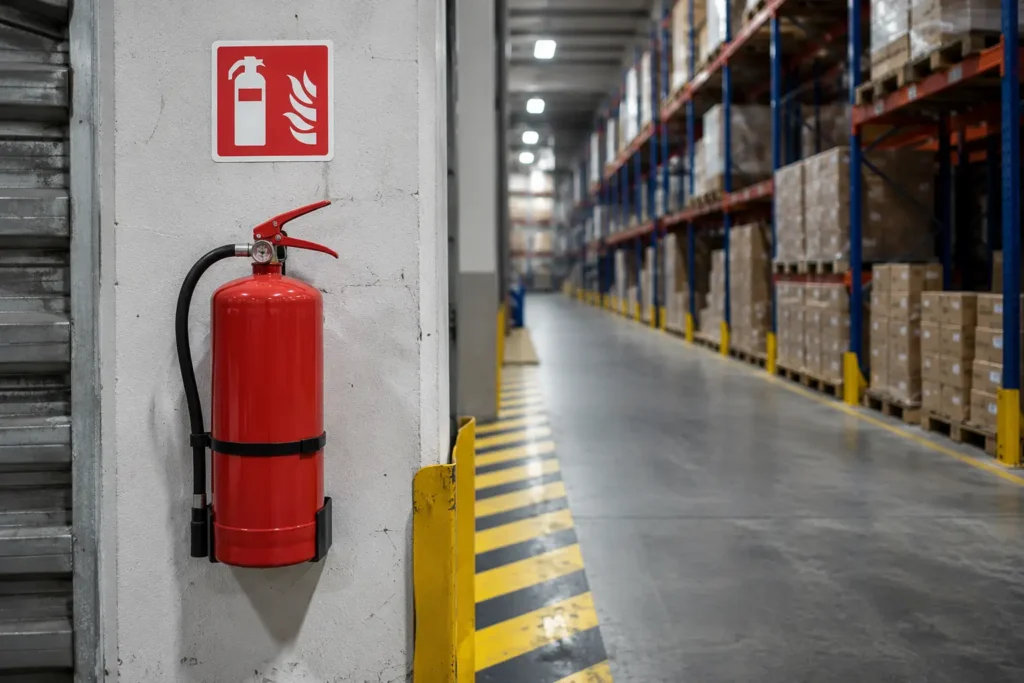
Fire safety in warehouses is not optional — it’s a critical part of protecting inventory, infrastructure, and lives. Warehouses combine dense storage, heavy machinery, and constant movement of goods, which makes them one of the most fire-prone environments in any supply chain. A single spark near the wrong shelf can turn into a total loss within minutes. In fact, fire incidents in warehouses remain among the most costly and disruptive events any logistics operation can face. This guide walks through why warehouses carry so much fire risk, the suppression systems built to handle it, and what warehouse fire safety actually requires under Indian regulations — so you can make an informed decision instead of a rushed one after an incident.
Why Are Warehouses High-Risk Fire Zones?
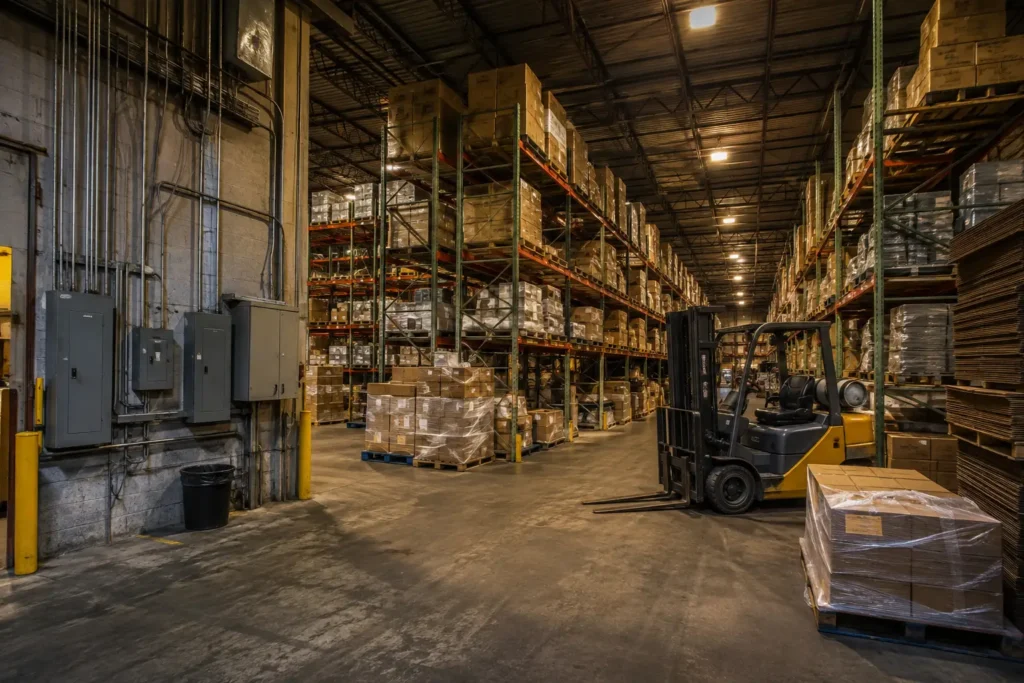
Warehouses are high-risk fire zones because they store combustible materials in bulk, have large open spaces that let fires spread quickly, and often rely on electrical equipment like forklifts and racking systems that can spark ignition. Add limited staff supervision across large floor areas, and a small fire can go unnoticed until it’s no longer small. Many of these risk patterns are common across industrial facilities, not just warehouses.
A few factors compound this risk specifically in warehouse settings:
● High-density storage means more fuel load per square foot than almost any other commercial space
● Tall racking systems create vertical fire spread paths that standard sprinklers weren’t originally designed for
● Constant forklift and machinery movement raises the chance of electrical or friction-based ignition
● Loading docks and open bay doors bring in dust, debris, and sometimes flammable material handling
● Warehouses are often operational around the clock, with fewer people watching the floor during off-peak shifts
Effective warehouse fire safety starts with recognizing these risk factors before they turn into an incident.
What Types of Fires Can Happen in a Warehouse?
Under Indian Standard IS 2190, warehouses typically face Class A fires from packaging and stored goods, Class B fires from flammable liquids and fuels, and Class C fires from pressurized flammable gases — alongside a constant electrical fire risk from machinery and wiring. Knowing which class you’re dealing with determines which suppression method and extinguisher will actually work — using the wrong one can make things worse.
● Class A — cardboard, wood pallets, paper packaging, plastic wrapping, textiles
● Class B — fuel for forklifts, lubricants, paints, solvents, and other flammable liquids stored on-site
● Class C — flammable gases under pressure, including LPG cylinders sometimes stored or used on-site
● Class D (less common but relevant in metal-handling warehouses) — combustible metal dust or shavings
Electrical fires deserve a separate mention. Unlike some international systems, Indian Standard IS 2190 doesn’t assign electrical fires their own class — a fire involving live wiring, overloaded panels, or racking-mounted electrical equipment is classified by whatever material is actually burning. What matters operationally is choosing an extinguisher that’s safe to use around live electricity: water and foam should never be used near energized equipment, since they conduct current, while CO2 and dry powder extinguishers are the safer choice. For a deeper look at this risk, see our guide on electrical fire safety.
Fire safety for warehouses and storage facilities has to account for all of these simultaneously, since most facilities store a mix of packaging, machinery, and fuel-powered equipment under one roof. This is why fire safety in warehouses must be planned around the specific fire classes present on-site, not treated as one-size-fits-all.
Fire Protection Challenges in Warehouses and Logistics Facilities
Fire protection challenges in warehouses and logistics facilities stem from scale — tall storage racks, long response distances, and high-value inventory concentrated in one space make both detection and suppression harder than in a typical commercial building. Standard building-scale fire systems often aren’t enough once ceiling heights and storage density go up, which is exactly why the fire protection of modern warehouses looks so different from what older, single-storey facilities relied on.
Some of the recurring challenges facilities run into:
● Sprinkler coverage gaps caused by rack height and storage configuration changes over time
● Delayed detection in large, high-ceilinged spaces where smoke takes longer to reach sensors
● Fire load that shifts constantly as inventory changes — what was low-risk storage last quarter might not be this quarter
● Coordinating suppression system design with racking, HVAC, and loading dock layouts, especially in leased facilities
● Balancing fire safety upgrades against operational downtime, since shutting a warehouse down even briefly is costly
Addressing these challenges is central to any warehouse fire safety strategy, since gaps in coverage often go unnoticed until an incident exposes them.
Principles of Fire Safety in Warehouses and Factories
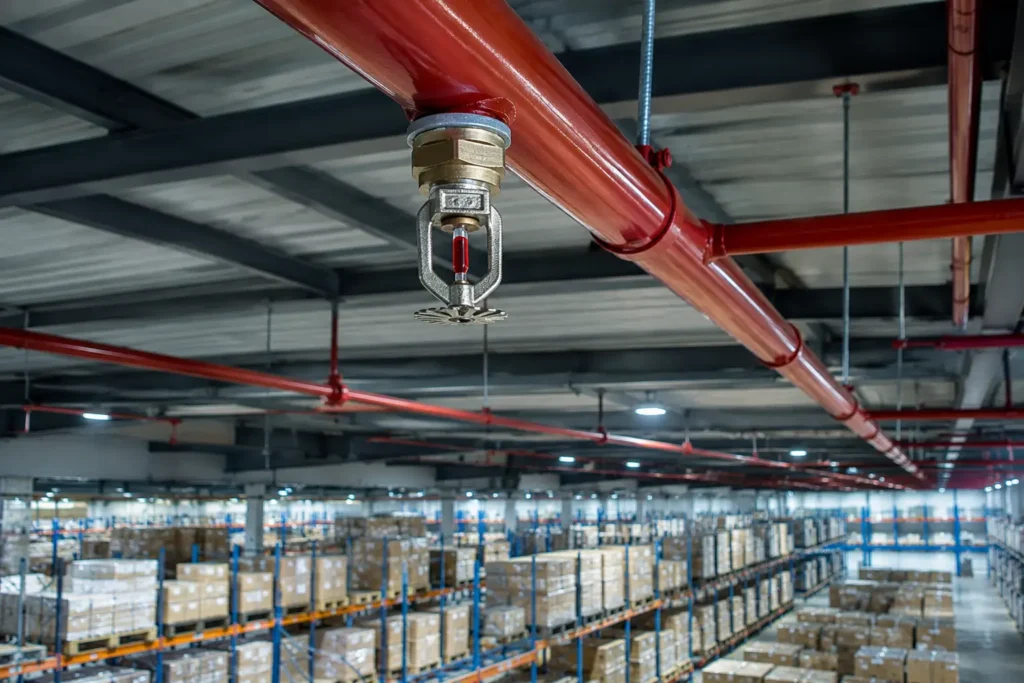
The core principles of fire safety in warehouses and factories are prevention, early detection, containment, and rapid suppression — in that order of priority. Prevention reduces how often fires start; detection and containment limit how far they spread before suppression systems or staff can respond.
In practice, this means:
● Prevention — proper storage practices, regular electrical inspections, and housekeeping that keeps aisles and exits clear
● Detection — smoke detectors, heat detectors, and increasingly, condition monitoring sensors placed according to ceiling height and storage type
● Containment — fire-rated walls, compartmentalized storage zones, and racking layouts designed to slow horizontal spread
● Suppression — sprinkler systems, hose reels, and portable extinguishers matched to the specific fire classes present on-site
Together, these principles form the foundation of fire safety in warehouses, and skipping any one of them weakens the entire system.
Which Fire Suppression System Is Right for Your Warehouse?
The right fire suppression system for a warehouse depends on ceiling height, storage type, and fire class risk — most facilities use a combination of sprinkler systems, hydrant valves, and portable extinguishers rather than relying on a single solution. No single system covers every scenario a warehouse can face.
● Wet-pipe sprinkler systems — best for general storage with standard ceiling heights; water discharges automatically once heat triggers the sprinkler head
● Pre-action/dry-pipe systems — best for cold storage or areas prone to accidental discharge; pipes stay dry until a detector confirms an actual fire, then water fills the line
● Fire hydrant valves — best for large-footprint warehouses and high fire load zones; connected to a pressurized water main for sustained, high-volume suppression
● ABC dry powder extinguishers — best for mixed-risk areas covering Class A, B, and C fires; portable, and smothers and interrupts the chemical reaction of the fire
● CO2 extinguishers — best for electrical panels, server rooms, and sensitive equipment; displaces oxygen without leaving residue on equipment
Here’s a quick side-by-side comparison of the most common warehouse fire safety systems, to make it easier to match the right option to your facility:
| System | Best For | How It Works |
| Wet-Pipe Sprinkler System | General storage areas with standard ceiling heights | Water discharges automatically once heat triggers the sprinkler head |
| Pre-Action / Dry-Pipe System | Cold storage or areas prone to accidental discharge | Pipes stay dry until a detector confirms an actual fire, then water fills the line |
| Fire Hydrant Valve | Large-footprint warehouses and high fire load zones | Connected to a pressurized water main for sustained, high-volume suppression |
| ABC Dry Powder Extinguisher | Mixed-risk areas covering Class A, B, and C fires | Smothers the fire and interrupts its chemical reaction; portable and easy to deploy |
| CO2 Extinguisher | Electrical panels, server rooms, sensitive equipment | Displaces oxygen to starve the fire, without leaving residue on equipment |
For most Indian warehouses, a layered approach works best: automatic sprinkler or hydrant coverage for the building as a whole, backed up by correctly placed portable extinguishers for fast, localized response. This kind of layered warehouse fire safety design reduces reliance on any single system.
Explore our Fire Sprinkler Systems, Hydrant Valves, and ABC/CO2 regulations warehouse fire safety framework Extinguishers product ranges.
Fire Safety Requirements & Regulations for Warehouses in India
Fire safety requirements for warehouses in India are governed primarily by the National Building Code (NBC) and state-level fire NOC (No Objection Certificate) approvals, which set standards for exits, suppression systems, and structural fire resistance. Compliance isn’t optional for operating legally, and it’s often a prerequisite for insurance coverage too — which is why facility managers increasingly track the 27 regulations warehouse fire safety framework that spans NBC provisions, state fire NOC norms, and industrial safety requirements.
Key regulatory points warehouse operators need to know:
● The National Building Code (NBC) lays out fire safety norms covering means of egress, fire-resistant construction, and minimum suppression system requirements based on building size and occupancy
● A Fire NOC from the local fire department is typically mandatory before a warehouse can legally operate, and renewal is required periodically
● Local fire department norms can layer additional requirements on top of the NBC, depending on state and municipality
● Warehouses storing hazardous or flammable materials often face stricter norms under separate industrial safety regulations
● Insurance providers frequently require documented compliance with these regulations as a condition of coverage
This is exactly where warehouse fire safety regulations checklist requirements start to overlap with practical operations — a facility that’s compliant on paper needs to actually maintain that standard day to day, not just at the time of inspection. Strong warehouse fire safety compliance also simplifies insurance renewals and audits down the line.
See also: why fire safety equipment is mandatory for commercial buildings.
Early Fire Detection & Condition Monitoring for Warehouses
Early fire detection in warehouses relies on smoke and heat detectors combined with condition monitoring systems that track temperature, humidity, and equipment performance to catch risks before they ignite. The earlier a risk is flagged, the more options you have to intervene without triggering a full suppression event. Early detection consistently saves lives and reduces damage— it’s one of the highest-ROI investments in a fire safety plan.
Modern approaches to enhance warehouse fire safety go beyond basic detectors:
● Heat-mapping sensors in high-rack storage zones where traditional smoke detectors are slower to respond
● Condition monitoring on electrical panels and machinery to flag overheating before it becomes ignition
● Centralized alarm panels that give facility managers a real-time view across multiple zones
● Integration with building management systems so alerts reach the right people immediately, not just a local siren
Investing in early detection is one of the most cost-effective ways to strengthen warehouse fire safety overall.
Warehouse Fire Safety Checklist: Regulations & Tips
A warehouse fire safety checklist should cover regulatory compliance, equipment maintenance, storage practices, and staff readiness — treating all four as equally important rather than focusing only on equipment. Use the list below as a working audit tool.
1. Valid Fire NOC on file and renewed on schedule
2. Compliance confirmed against current National Building Code requirements
3. Sprinkler systems inspected and tested per manufacturer schedule
4. Fire hydrant valves pressure-tested regularly
5. Portable extinguishers inspected monthly, tagged with last service date
6. Extinguishers matched correctly to the fire classes present in each zone
7. Smoke and heat detectors tested and calibrated
8. Alarm panels functioning and audible across the full facility
9. Evacuation routes clearly marked and kept unobstructed
10. Assembly points identified and communicated to all staff
11. Fire wardens assigned per zone or shift
12. Racking and storage layout reviewed for fire spread risk
13. Aisles kept clear of stock overflow and packaging debris
14. Flammable liquids stored in designated, ventilated areas
15. Electrical panels and wiring inspected for wear or overload
16. Forklift charging stations kept away from combustible storage
17. Loading dock areas checked for debris and fire load buildup
18. Condition monitoring sensors active on high-risk equipment
19. Emergency contact numbers posted at multiple visible points
20. Fire drills conducted at planned intervals, not just annually
21. New employee onboarding includes fire safety orientation
22. Incident reporting process in place for near-misses, not just actual fires
23. Insurance documentation cross-checked against current compliance status
24. Third-party fire safety audit scheduled at least once a year
25. Corrective actions from the last audit tracked to completion
Extinguisher Placement Guidelines for Warehouses (Don’t Forget Portable Extinguishers)
Portable extinguishers in a warehouse should be placed within 15 meters of any point on the floor, mounted at accessible height, and matched to the fire class risk of that specific zone. Automatic suppression systems handle the big picture, but portable extinguishers are what staff actually reach for in the first 60 seconds of an incident.
Placement guidelines worth following:
● Position extinguishers near high-risk zones — charging stations, electrical panels, flammable liquid storage — not just near exits
● Keep travel distance to any extinguisher under roughly 15 meters, in line with common fire safety norms
● Mount extinguishers at a height staff can reach without needing a ladder or stool
● Label each extinguisher clearly with the fire classes it’s rated for
● Avoid blocking extinguisher access with stacked inventory, even temporarily
Correct placement is a small but critical part of overall warehouse fire safety that’s easy to overlook.
Warehouse Fire Safety Audit Checklist
A warehouse fire safety audit checklist verifies that equipment, documentation, and staff readiness all meet current standards, and should be run at least annually, with more frequent checks for high-risk facilities. An audit isn’t the same as day-to-day maintenance — it’s a structured review meant to catch gaps that routine checks might miss.
A thorough audit typically includes:
1. Full review of Fire NOC status and any outstanding regulatory requirements
2. Physical inspection of every suppression system component, not just a sample
3. Verification that extinguisher placement still matches current storage layout
4. Review of past incident and near-miss reports for recurring patterns
5. Staff interviews or drills to confirm training retention, not just attendance records
6. A written report with prioritized corrective actions and realistic timelines
Why Choose MANXPOWER for Warehouse Fire Safety
Warehouses don’t need generic fire equipment bolted on as an afterthought — they need systems designed around how the facility actually operates. MANXPOWER supplies fire sprinkler systems, hydrant valves, and ABC/CO2 extinguishers built to BIS and international standards, with equipment simple enough that staff can be trained on it quickly and reliably. Beyond the products themselves, MANXPOWER’s team works with facility managers to map suppression system design against actual racking layouts, storage density, and regulatory requirements — rather than selling a one-size-fits-all package. For warehouses balancing compliance, budget, and operational uptime, that kind of tailored planning tends to matter more than the equipment specs alone.
Final Thoughts: Protect Your Warehouse Before It’s Too Late
Fire safety in warehouses isn’t something to revisit only after an incident or a failed inspection. Between high fire loads, tall storage, and constant equipment movement, the risks are baked into how warehouses operate — which means the fire protection strategy needs to be just as deliberate. Get the suppression system right, stay current on India’s regulatory requirements, and keep your warehouse and your people safe from fire with a plan that’s reviewed regularly, not set once and forgotten. Make warehouse fire safety a standing item on your operations calendar, not an afterthought.
FAQs
What are the fire safety requirements for warehouses in India?
Warehouses in India must comply with National Building Code (NBC) fire safety provisions and hold a valid Fire NOC from the local fire department. Requirements cover suppression systems, means of egress, and structural fire resistance, and can vary by state.
Why are warehouses considered high-risk fire zones?
Warehouses combine high-density combustible storage, tall racking that speeds vertical fire spread, and heavy equipment like forklifts that can ignite fires. Large open floor areas also make early detection harder than in smaller commercial spaces.
What types of fire suppression systems are used in warehouses?
Warehouses typically use wet-pipe or pre-action sprinkler systems for automatic coverage, fire hydrant valves for high-volume response, and portable ABC or CO2 extinguishers for fast, localized suppression near specific risk zones.
How often should a warehouse fire safety audit be conducted?
At least once a year, with more frequent audits recommended for high-risk facilities storing flammable materials or operating continuously. Audits should be separate from routine maintenance checks.
What is the recommended placement for fire extinguishers in a warehouse?
Extinguishers should be within roughly 15 meters of any point on the floor, mounted at accessible height, positioned near high-risk zones, and clearly labeled for the fire classes they’re rated to handle.
What are the four key fire safety tips for warehouses?
Prioritize prevention through good housekeeping and equipment maintenance, invest in early detection systems, design storage layouts that contain fire spread, and match suppression equipment correctly to the fire risks actually present on-site.
Is a fire NOC mandatory for warehouses in India?
Yes, a Fire NOC from the local fire department is generally mandatory before a warehouse can legally operate, and it must be renewed periodically to remain valid.