
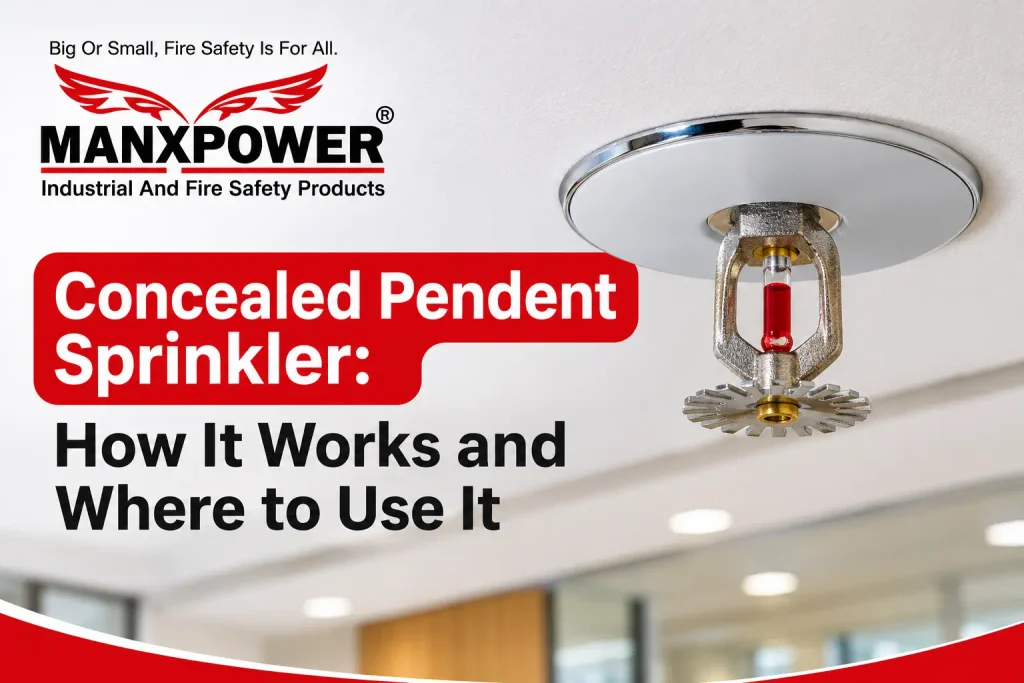
A concealed pendent sprinkler is a ceiling-mounted fire sprinkler hidden behind a flat cover plate. It is installed above a false ceiling, leaving only the cover plate visible from below.
This design helps maintain a clean ceiling appearance while providing automatic fire protection. Concealed pendent sprinklers are commonly considered for hotels, offices, showrooms and residential buildings where interior appearance matters.
If you are comparing different sprinkler options, explore our guide to types of fire sprinklers or see our concealed fire sprinkler range.
In this guide, we explain how concealed pendent sprinklers work, where they are used, how they differ from recessed sprinklers and what to check before buying.
Looking for Concealed Fire Sprinklers? Visit Manximpex to see the concealed fire sprinkler range, or email us your project requirements for specifications and a quote.
Website: https://manximpex.com/ | Call: +91 11 4987 2937 | Email: info@manximpex.com
How Does a Concealed Pendent Sprinkler Work?
Each concealed pendent sprinkler head has several components that work together during a fire:
- Sprinkler body: Connects to the fire sprinkler pipework above the ceiling.
- Heat-sensitive element: Holds back the water until the sprinkler reaches its rated operating temperature.
- Deflector: Distributes water across the protected area.
- Cover plate: Hides the sprinkler assembly and provides a finished ceiling appearance.
What Happens When a Fire Starts?
The operation generally takes place in two stages:
- Cover plate release: Heat from the fire causes the cover plate’s release mechanism to operate. The plate detaches and falls away, exposing the sprinkler.
- Sprinkler activation: Continued heating causes the sprinkler’s heat-sensitive element to operate when its rated temperature is reached. Water then flows through the sprinkler and is distributed by the deflector.
Only individual sprinkler heads exposed to sufficient heat normally activate. Other sprinkler heads remain closed unless their own operating temperatures are reached.
The exact operating mechanism and cover plate temperature depend on the sprinkler model. Always refer to the manufacturer’s datasheet.
Concealed vs Recessed vs Semi-Recessed Sprinkler Heads
These sprinkler types are often confused because they are designed to provide a finished ceiling appearance. However, their visible components are different.
| Type | Installation position | Appearance |
| Concealed sprinkler | Sprinkler assembly hidden above the ceiling | Mainly a flat cover plate is visible |
| Recessed sprinkler | Sprinkler positioned partly within the ceiling | Trim ring and part of the sprinkler remain visible |
| Semi-recessed sprinkler | Sprinkler partly recessed into the ceiling | More of the sprinkler assembly remains visible |
The exact appearance and installation arrangement can vary between manufacturers and models. Check the product datasheet before selecting a sprinkler.
A concealed ceiling sprinkler is suitable for designs that require a discreet ceiling finish. A concealed type sprinkler, including the concealed pendent type, also needs a ceiling that can hold it, so check the mounting details first. Where ceiling installation is difficult, a sidewall fire sprinkler may also be considered, depending on the building layout and fire protection design.
Where Are Concealed Sprinklers Used?
A pendent concealed sprinkler is commonly considered for buildings where ceiling appearance is an important design factor.
Typical applications include:
- Hotels and resorts: Guest rooms, reception areas and corridors.
- Offices: Meeting rooms, reception areas and workspaces.
- Showrooms and malls: Retail areas where exposed sprinkler heads may affect the interior design.
- Restaurants: Dining areas and other suitable indoor spaces.
- Hospitals and institutions: Areas where a finished ceiling appearance is preferred.
- Residential buildings: Apartments and homes with suitable false-ceiling arrangements.
The final sprinkler selection depends on the building’s fire protection design, occupancy requirements and applicable installation standards.
Concealed Residential Sprinkler System
A concealed residential sprinkler system can be considered for residential projects where maintaining the appearance of living rooms, bedrooms and other finished spaces is important.
However, not every room or residential building requires the same sprinkler arrangement. Coverage, sprinkler type and installation requirements must be determined by the approved fire protection design and applicable local regulations.
Concealed Sprinkler Installation: Points to Consider
Proper installation is important for sprinkler performance. The layout and installation must follow the manufacturer’s instructions and approved fire protection design.
Consider these points before installation:
- Check the ceiling opening: Confirm the required cut-out size and mounting dimensions from the product datasheet before finishing the ceiling.
- Plan the pipe connection: Ensure the sprinkler connection is properly positioned above the false ceiling.
- Consider flexible sprinkler hoses: Where permitted by the system design, flexible fire sprinkler hoses can help connect sprinkler heads to branch lines and simplify positioning.
- Install the cover plate correctly: Follow the manufacturer’s instructions for fitting and adjusting the cover plate.
- Keep the spray area clear: Lights, furniture and ceiling features should not obstruct the sprinkler’s intended water distribution.
- Avoid unauthorised painting: Do not paint or modify the cover plate unless the manufacturer specifically permits it.
A qualified fire protection contractor should carry out installation, testing and inspection according to the applicable requirements.
Indian Standards Related to Sprinklers
Two Indian Standards are commonly referred to on sprinkler projects:
- IS 9972: Covers automatic sprinkler heads. It describes a concealed sprinkler as one where the entire body, including the operating mechanism, sits above a concealing plate. It also notes that a sprinkler’s operating temperature is generally selected to suit ambient temperature conditions.
- IS 15105: The code of practice for the design and installation of fixed automatic sprinkler fire extinguishing systems.
Standards are revised from time to time, so confirm the current edition and the applicable local regulations with your fire consultant before finalising a design.
Checklist Before Buying a Concealed Sprinkler
Before ordering, compare the technical specifications with your project requirements.
The following specifications are listed for the MANXPOWER concealed fire sprinkler.
| Specification | MANXPOWER product details |
| Sprinkler type | Concealed |
| Thread size | 1/2 inch |
| Temperature rating | 68°C |
| Body material | Brass |
| Cover plate finish | Chrome-plated |
| Response type | Standard response |
| Installation | Concealed installation above false ceilings |
| Pack size | Pack of 10 |
Also check the following before placing an order:
- Connection compatibility: Confirm the thread type and size match the project fittings.
- Temperature rating: Ensure the selected rating is appropriate for the expected ambient temperature and fire protection design.
- Cover plate finish: Select a finish suitable for the ceiling and interior design.
- Mounting arrangement: Confirm the sprinkler is suitable for the planned ceiling construction.
- Approvals: Request the relevant product approvals and technical datasheet.
- Quantity: Calculate the required quantity according to the approved sprinkler layout.
Do not select a sprinkler based only on its appearance. Technical compatibility and the approved fire protection design should guide the purchase.
Need Help Choosing the Right Specification? Share your quantity, finish and temperature rating requirements with the Manximpex team and get the right options and a quote.
Website: https://manximpex.com/ | Call: +91 11 4987 2937 | Email: info@manximpex.com
Choosing Concealed Sprinklers for Hotel and Office Projects
Large commercial projects, including those in Delhi NCR, require careful coordination between the fire protection system and the building’s ceiling design.
Here are some common purchasing and installation mistakes to avoid:
- Ordering before finalising the ceiling layout: Confirm sprinkler positions and ceiling openings before installation work begins.
- Ignoring ceiling temperatures: Check whether the selected temperature rating is suitable for the actual environment. Top-floor areas in summer or spots near heaters can run hot.
- Assuming every project needs standard response sprinklers: Response type must match the approved fire protection design.
- Ignoring thread compatibility: Confirm the sprinkler connection matches the fittings.
- Treating the cover plate as decoration: It is part of the sprinkler assembly and must be handled according to manufacturer instructions.
For multi-floor hotel and office projects, confirm the required specifications, finishes and quantities before ordering to maintain consistency throughout the project.
Conclusion
A concealed pendent sprinkler is an option for buildings that require automatic fire protection while maintaining a clean ceiling appearance.
Before choosing one, check the sprinkler’s temperature rating, connection size, response type, cover plate specifications and compatibility with the approved fire protection design.
For project requirements, explore the MANXPOWER concealed fire sprinkler
Need Concealed Fire Sprinklers for Your Project? Share your requirements, such as quantity, finish and temperature rating, and the Manximpex team will help you with the right options and a quote.
Website: https://manximpex.com/ | Call: +91 11 4987 2937 | Email: info@manximpex.com
Frequently Asked Questions
1. What happens first when a fire heats a concealed pendent sprinkler?
The cover plate’s release mechanism operates first, allowing the plate to fall away. Continued heating then activates the sprinkler’s heat-sensitive element when it reaches its rated operating temperature.
2. Can a concealed sprinkler cover plate be painted after installation?
Do not paint the cover plate unless the manufacturer specifically permits it. Unauthorised paint or modifications may interfere with the cover plate’s release mechanism.
3. Can concealed pendent sprinklers be installed in every false ceiling?
No. The ceiling construction, mounting arrangement, sprinkler position and available space must be suitable for the selected model. Check the manufacturer’s installation instructions before proceeding.
4. Is a 68°C concealed sprinkler suitable for every room?
Not necessarily. A 68°C rating is listed for the MANXPOWER concealed fire sprinkler. The correct temperature rating depends on the expected ambient temperature and the approved fire protection design.