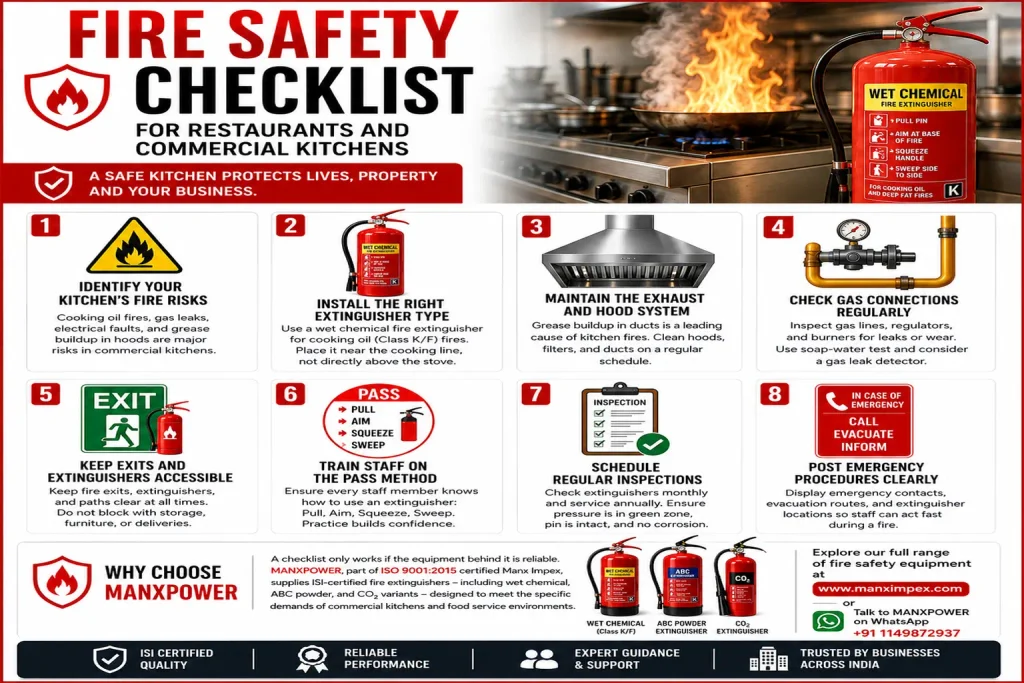
Commercial kitchens face a fire risk unlike almost any other workplace — open flames, hot oil, gas connections, and grease buildup all in one space. A single unchecked hazard can shut down a restaurant for weeks. This checklist covers the essentials every restaurant or commercial kitchen should have in place.
1. Identify Your Kitchen’s Fire Risks
Cooking oil fires (Class K/F) are the most common and dangerous risk in a kitchen, since water cannot extinguish them and ordinary extinguishers can make them worse. Gas leaks, electrical faults near wet surfaces, and grease-clogged exhaust hoods add further risk.
2. Install the Right Extinguisher Type
A standard ABC or water extinguisher is not designed for cooking oil fires. Kitchens need a wet chemical fire extinguisher, which cools burning oil and forms a soapy film that prevents re-ignition. Place it near the cooking line but not directly above the stove, so it stays accessible if a fire breaks out.
3. Maintain the Exhaust and Hood System
Grease buildup inside exhaust ducts is a leading cause of kitchen fires spreading beyond the cooking area. Hoods, filters, and ducts should be cleaned on a regular schedule — more frequently for high-volume kitchens.
4. Check Gas Connections Regularly
Inspect gas lines, regulators, and burners for leaks or wear. A simple soap-water test on connections can catch leaks before they become dangerous. Consider a gas leak detector for added protection, especially in enclosed kitchen areas.
5. Keep Fire Exits and Extinguishers Accessible
Nothing should block extinguishers, fire exits, or emergency exit paths — not storage racks, not delivery crates, not staff lockers. Staff should know the exact location of every extinguisher without having to search.
6. Train Staff on the PASS Method
Every kitchen employee should know how to use an extinguisher: Pull the pin, Aim at the base of the fire, Squeeze the handle, Sweep side to side. Untrained staff often panic or use the wrong technique during an actual fire.
7. Schedule Regular Inspections
Extinguishers should be visually checked monthly and professionally serviced annually. A pressure gauge in the “green zone,” an intact safety pin, and no visible corrosion are quick signs an extinguisher is ready for use.
8. Post Emergency Procedures Clearly
A visible, simple emergency procedure — who to call, where to evacuate, where the nearest extinguisher is — helps staff act quickly instead of freezing up during a real fire.
Why Choose MANXPOWER for Kitchen Fire Safety
A checklist only works if the equipment behind it is reliable. MANXPOWER, part of ISO 9001:2015 certified Manx Impex, supplies ISI-certified fire extinguishers — including wet chemical, ABC powder, and CO2 variants — designed to meet the specific demands of commercial kitchens and food service environments. From choosing the right extinguisher type for oil-based fires to ensuring consistent quality across every unit, MANXPOWER products are built to perform when they’re needed most, not just to pass a checklist.
Restaurant owners and facility managers can explore the full range of fire safety equipment, including extinguishers suited for kitchen use, at www.manximpex.com, or talk to MANXPOWER on WhatsApp for quick guidance on choosing the right extinguisher for your kitchen.
Conclusion
Fire safety in a commercial kitchen isn’t a one-time installation — it’s an ongoing responsibility that combines the right equipment, regular maintenance, and trained staff. From choosing a wet chemical extinguisher for oil fires to keeping exhaust systems clean and exits clear, each step on this checklist reduces risk in a space where fires can start and spread quickly. Investing in reliable, certified fire safety equipment from a trusted supplier like MANXPOWER, and reviewing this checklist regularly, gives restaurants and commercial kitchens the protection they need to keep staff, customers, and the business safe.
FAQs
What type of fire extinguisher is best for a commercial kitchen?
A wet chemical fire extinguisher is best for commercial kitchens, since it’s specifically designed for Class K/F cooking oil fires that ordinary extinguishers cannot safely handle.
How often should kitchen exhaust hoods be cleaned?
Frequency depends on cooking volume, but high-use commercial kitchens typically need hood and duct cleaning more often than low-volume kitchens — check with local fire codes for specific requirements.
Can I use a regular ABC extinguisher on a cooking oil fire?
It’s not recommended. Cooking oil fires burn differently from ordinary fires, and a wet chemical extinguisher is designed specifically to cool and suppress them safely.
How often should kitchen staff receive fire safety training?
Staff should be trained when they join and refreshed periodically, so everyone knows extinguisher locations, the PASS method, and emergency evacuation procedures without hesitation during a real fire.
What is the most common cause of restaurant fires?
Cooking equipment, especially unattended stovetops, deep fryers, and grease buildup in exhaust systems, is one of the leading causes of restaurant fires.