Fire safety systems play a crucial role in protecting lives and property. At the center of every fire detection system is the fire alarm control panel, which acts as the brain of the entire system. It receives signals from detectors and manual call points, processes the information, and activates alarms or other safety devices when a fire is detected.
In this blog, we will explain how fire alarm panels work, what zones are, how detection happens, and how the system controls alarms during emergencies.
What is a Fire Alarm Panel?
A fire alarm panel (also called a Fire Alarm Control Panel – FACP) is the central unit of a fire detection system. It continuously monitors connected devices such as smoke detectors, heat detectors, manual call points, and other input devices.
When a fire or fault is detected, the panel processes the signal and activates warning devices such as sirens, strobes, and hooters to alert occupants.
At MANXPOWER, our conventional fire alarm panels are designed with advanced technology to ensure reliable fire detection and quick response during emergencies.
Understanding Fire Alarm Zones
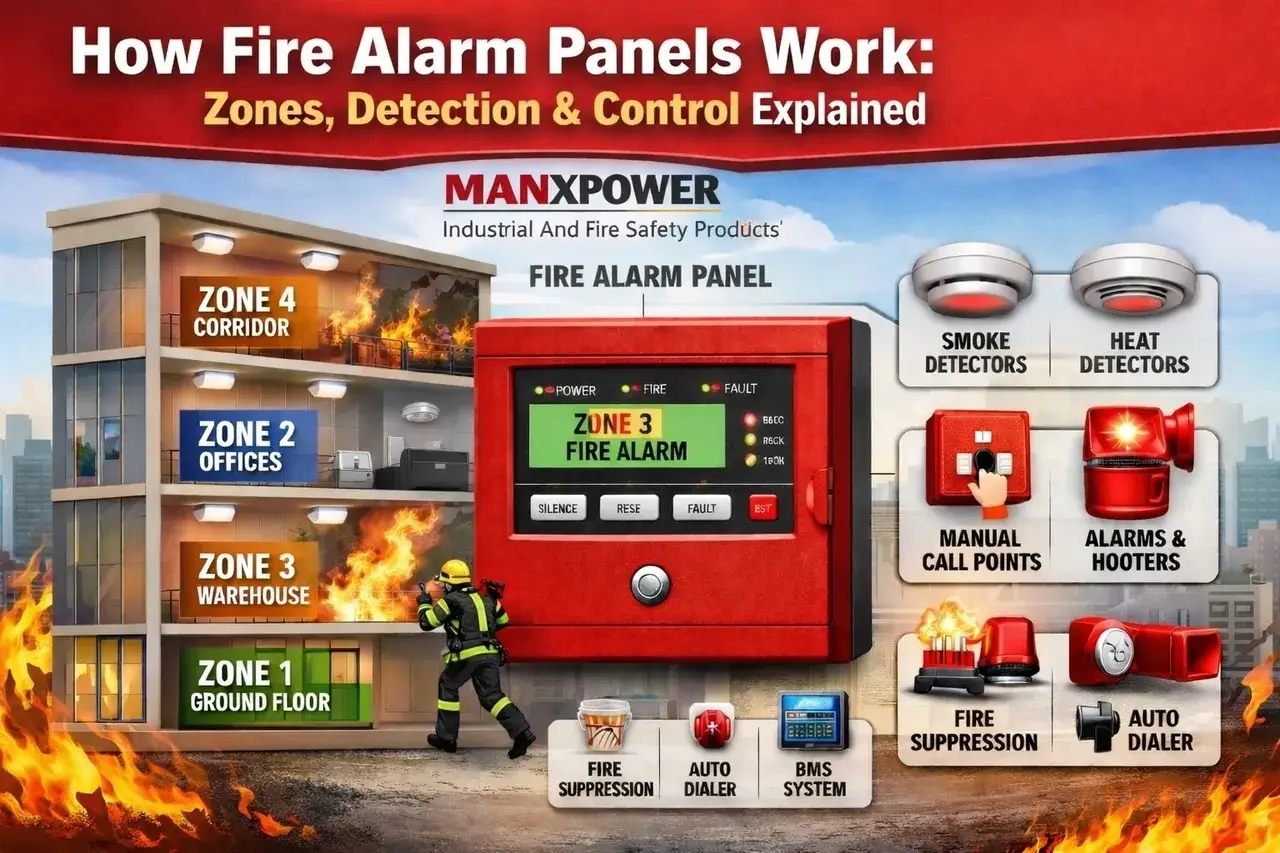
In a conventional fire alarm system, the building is divided into multiple zones. Each zone represents a specific area or section of the building, such as:
- A floor
- A corridor
- A room cluster
- A specific department
- A warehouse section
When a detector or manual call point is activated within a zone, the panel indicates the exact zone where the alarm originated.
Why Zones Are Important
Zones help emergency responders quickly identify where the fire may be located. This allows security teams or firefighters to investigate the correct area immediately.
For example:
- Zone 1 – Ground floor
- Zone 2 – First floor
- Zone 3 – Warehouse
- Zone 4 – Office area
If Zone 3 triggers an alarm, responders know the fire risk is in the warehouse section.
How Fire Detection Works
Fire alarm systems rely on various detection devices connected to the panel. These devices continuously monitor environmental conditions and send signals when abnormalities are detected.
Common Detection Devices
Smoke Detectors
Smoke detectors sense smoke particles in the air and are commonly used in offices, homes, hotels, and commercial buildings.
Heat Detectors
Heat detectors respond to sudden increases in temperature or when a preset temperature threshold is reached. These are ideal for kitchens, parking areas, and industrial spaces.
Multi Detectors
These combine smoke and heat detection for more accurate fire detection and reduced false alarms.
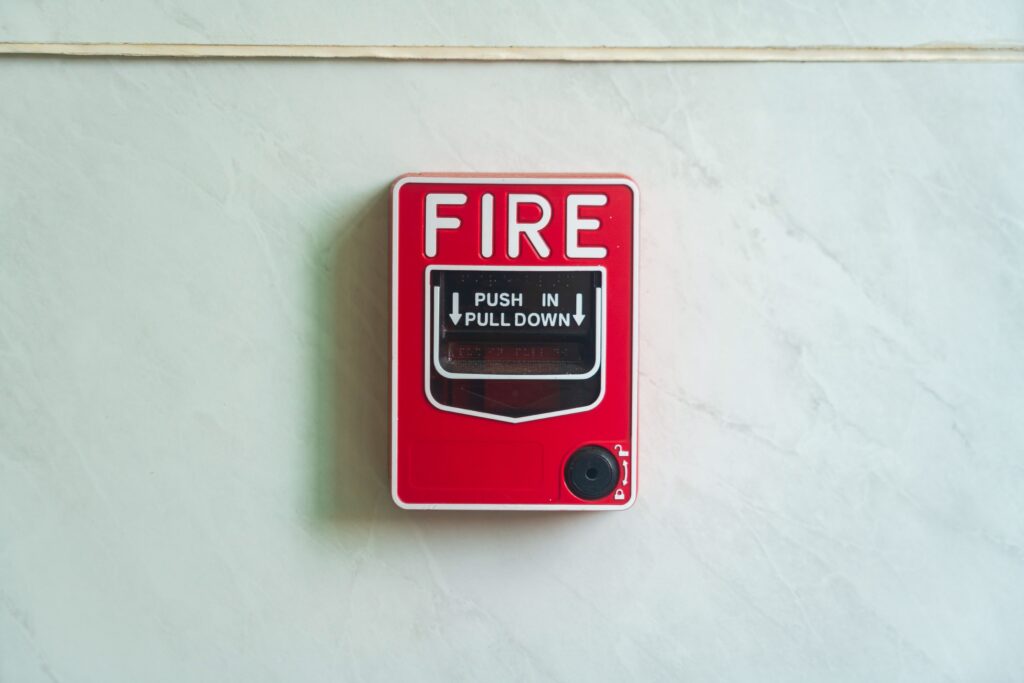
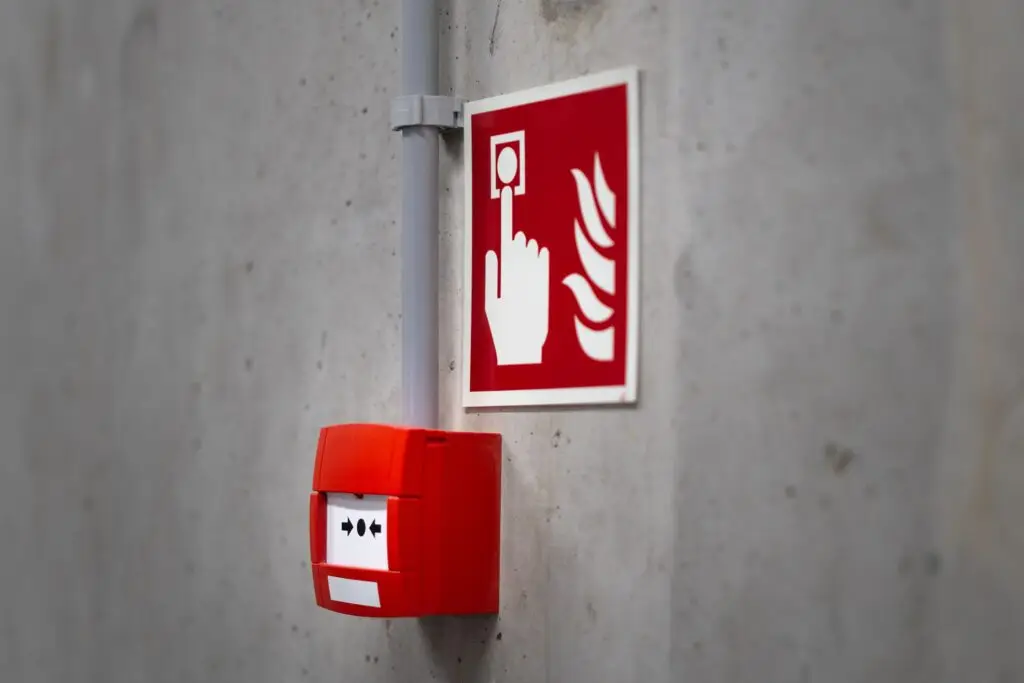
Manual Call Points (MCP)
These allow occupants to manually trigger the fire alarm if they spot a fire before detectors activate.
All these devices send signals to the fire alarm control panel, which then decides the next action.
How the Fire Alarm Panel Controls the System
Once the panel receives a fire signal from any detector or manual call point, it performs several important actions.
1. Identifies the Zone
The panel determines which zone triggered the alarm and displays this information through LEDs or LCD indicators.
2. Activates Alarm Devices
The panel triggers connected output devices such as:
- Fire hooters
- Strobe sirens
- Sounders
- Flashing lights
These alarms alert occupants to evacuate the building safely.
3. Sends Signals to Other Systems
Advanced panels can also activate:
- Fire suppression systems
- Auto dialers to notify authorities
- Building management systems
This ensures a coordinated emergency response.
What Happens During a Fault Condition?
Fire alarm panels also monitor system health. If a problem occurs, the panel generates a fault signal.
Common fault conditions include:
- Broken wiring
- Power supply failure
- Battery issues
- Device malfunction
The panel alerts maintenance teams so the system can be repaired quickly.
Advantages of Conventional Fire Alarm Panels
Conventional fire alarm panels are widely used because they are reliable and easy to operate.
Key advantages include:
- Simple system design
- Cost-effective fire detection solution
- Easy installation and maintenance
- Clear zone-based identification
- Compatible with multiple fire detection devices
These systems are ideal for small to medium buildings, offices, warehouses, schools, and commercial establishments.
MANXPOWER Fire Alarm Panels
MANXPOWER Conventional Fire Alarm Panels are designed with advanced microprocessor technology to provide dependable fire detection and control.
Key highlights include:
- Multiple zone options for different building sizes
- Clear LED and display indications
- Battery backup for uninterrupted protection
- Compatibility with smoke detectors, heat detectors, and MCPs
- Reliable operation for commercial and industrial environments
Our panels ensure that every alarm is detected quickly and every emergency is handled efficiently.
Final Thoughts
A fire alarm panel is the heart of any fire detection system. By organizing buildings into zones, monitoring detectors, and controlling alarm devices, it plays a critical role in ensuring safety.
Understanding how fire alarm panels work helps building owners and facility managers design better fire protection systems and respond quickly during emergencies.
With reliable products from MANXPOWER, you can ensure that your fire alarm system is always ready to protect lives and property.
MANXPOWER – Reliable Fire Safety Solutions for Every Building.
Contact us at info@manximpex.com