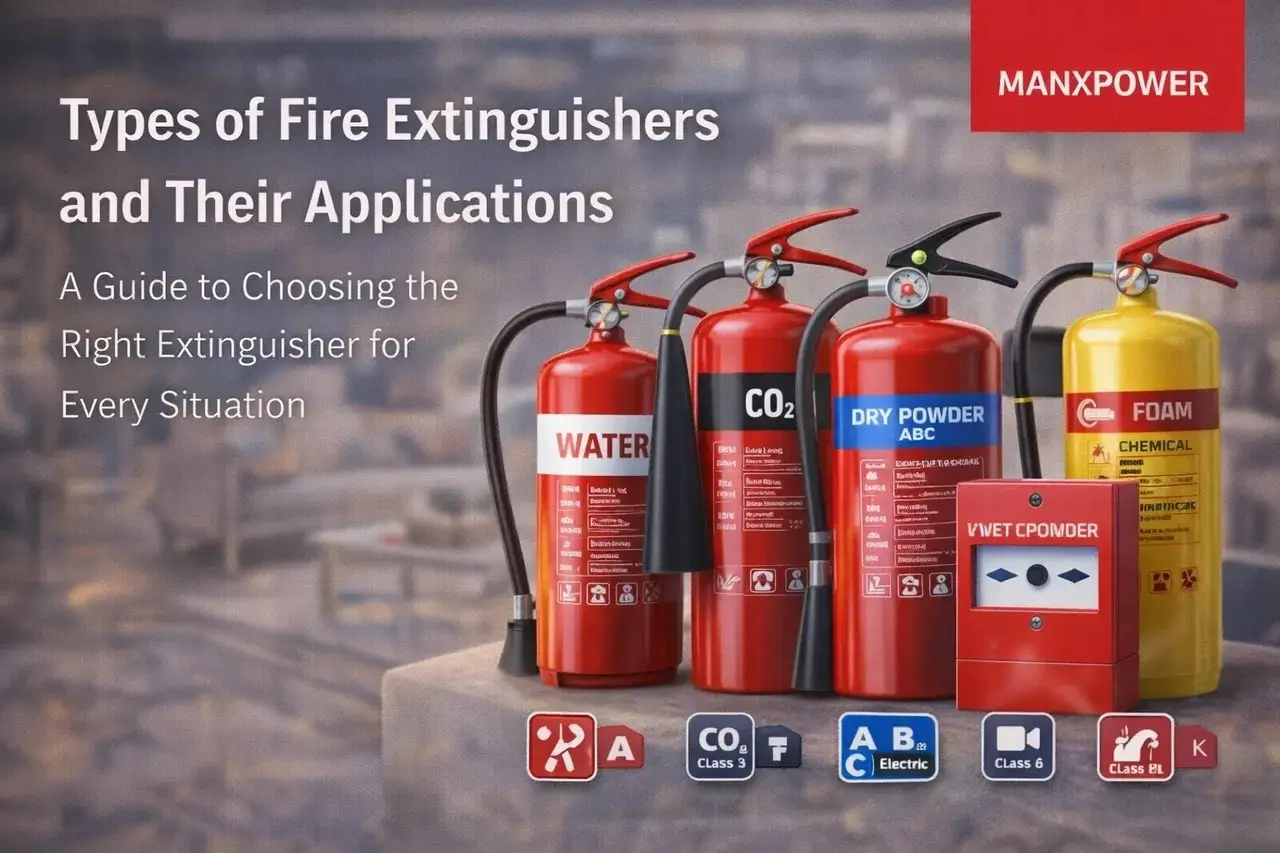
Fire extinguishers are the first line of defense when a fire breaks out. Choosing the correct type is critical because each extinguisher is designed to tackle specific classes of fire. Using the wrong one can be ineffective — or even dangerous.
This guide explains the most common types of fire extinguishers, their uses, and where they should be installed, helping you select the right protection for your facility with MANXPOWER fire safety solutions.
Understanding Fire Classes
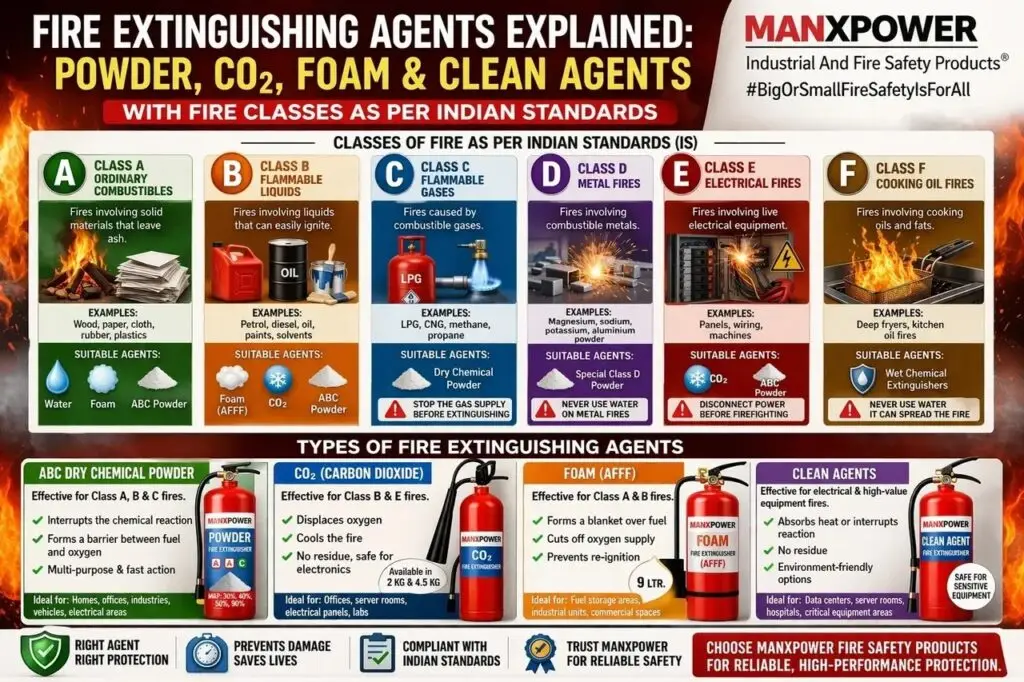
Before selecting an extinguisher, it’s important to know the fire classes:
- Class A: Solid combustibles (wood, paper, cloth, plastics)
- Class B: Flammable liquids (petrol, diesel, paints, solvents)
- Class C: Flammable gases (LPG, propane, methane)
- Class D: Combustible metals (magnesium, aluminum)
- Class K/F: Cooking oils and fats (commercial kitchens)
- Electrical Fires: Energized equipment (panels, wiring, servers)
1. Water Fire Extinguishers
Water extinguishers are designed primarily for Class A fires. They cool the burning material and prevent re-ignition.
Best for:
Homes, offices, schools, warehouses
Not suitable for:
Electrical or flammable liquid fires
Why choose:
Cost-effective and simple to use for general fire risks
2. Foam (AFFF) Fire Extinguishers
Foam extinguishers form a blanket over flammable liquids, cutting off oxygen and suppressing vapors.
Best for:
Class A and Class B fires
Common locations:
Petrol pumps, workshops, storage areas
Advantage:
Prevents re-ignition of liquid fires
3. CO₂ (Carbon Dioxide) Fire Extinguishers
CO₂ extinguishers displace oxygen and leave no residue, making them ideal for sensitive equipment.
Best for:
Electrical fires and Class B fires
Common locations:
Server rooms, offices, electrical panels
Key benefit:
No cleanup required after discharge
4. ABC Dry Chemical Powder Fire Extinguishers
ABC powder is one of the most versatile extinguishing agents, making it a popular choice for multi-risk environments.
Best for:
Class A, B, C fires and electrical hazards
Common locations:
Commercial buildings, factories, vehicles
Why it’s popular:
Multipurpose protection with high efficiency
MANXPOWER Tip:
ABC extinguishers are often recommended as general-purpose units where fire risks vary.
5. Wet Chemical Fire Extinguishers
Specifically designed for kitchen fires, wet chemical extinguishers cool burning oil and create a soapy layer that prevents re-ignition.
Best for:
Class K/F fires (cooking oils and fats)
Common locations:
Restaurants, commercial kitchens, food courts
Key advantage:
Safest solution for high-temperature oil fires
6. Clean Agent Fire Extinguishers
Clean agent extinguishers use non-conductive gases that leave no residue and are safe for electronics.
Best for:
Electrical fires and sensitive equipment
Common locations:
Data centers, laboratories, telecom facilities
Why choose:
Protects assets without damage or downtime
How to Choose the Right Fire Extinguisher
When selecting a fire extinguisher, consider:
- Type of fire risk present
- Size of the area
- Presence of electrical equipment
- Compliance with local fire safety regulations
- Ease of maintenance and servicing
A professional risk assessment ensures you install the correct extinguisher types and quantities.
Why Choose MANXPOWER Fire Extinguishers
MANXPOWER fire extinguishers are engineered for reliability, compliance, and performance across residential, commercial, and industrial environments.
Key benefits:
- High-quality certified extinguishing agents
- Durable construction for long service life
- Wide range covering all major fire classes
- Designed for quick response and easy operation
With MANXPOWER, you get dependable protection backed by professional fire safety expertise.
Final Thoughts
No single fire extinguisher can handle every type of fire. The safest approach is to install the correct combination based on your risk profile. Understanding the differences ensures faster response, reduced damage, and improved safety for people and property.
Contact us at info@manximpex.com