Fire safety is not optional—it is a legal requirement and a responsibility for every building owner, facility manager, and business operator in India. Whether it’s a commercial complex, residential building, hospital, school, warehouse, or factory, fire safety compliance ensures that the right systems are installed, maintained, and ready to perform during emergencies.
At MANXPOWER, we strongly believe that the foundation of fire protection begins with certified products, proper installation, and regular maintenance. This guide explains key fire safety standards in India, what ISI certification means, and the best practices every facility should follow.
Why Fire Safety Compliance Matters
Fire safety compliance is important for three major reasons:
- Protects Lives – Early detection and firefighting readiness reduces casualties.
- Protects Property – Fire safety systems reduce damage and prevent total loss.
- Ensures Legal Approval – Compliance is mandatory for NOCs, approvals, and operations.
Without compliance, buildings risk:
- Fire safety NOC rejection
- Fines and sealing of premises
- Insurance claim issues
- Legal liability in case of incidents
Key Fire Safety Standards in India
Fire safety in India is governed by a combination of national building standards and state fire authority regulations. The most widely referenced code is:
National Building Code (NBC) of India
The National Building Code provides guidelines for:
- Fire detection and alarm systems
- Firefighting systems (hydrants, extinguishers, sprinklers)
- Exit routes and evacuation planning
- Fire resistance and building materials
- Design requirements for different occupancies
It is the primary reference used by authorities for fire safety planning and approvals.
What Is ISI Certification in Fire Safety?
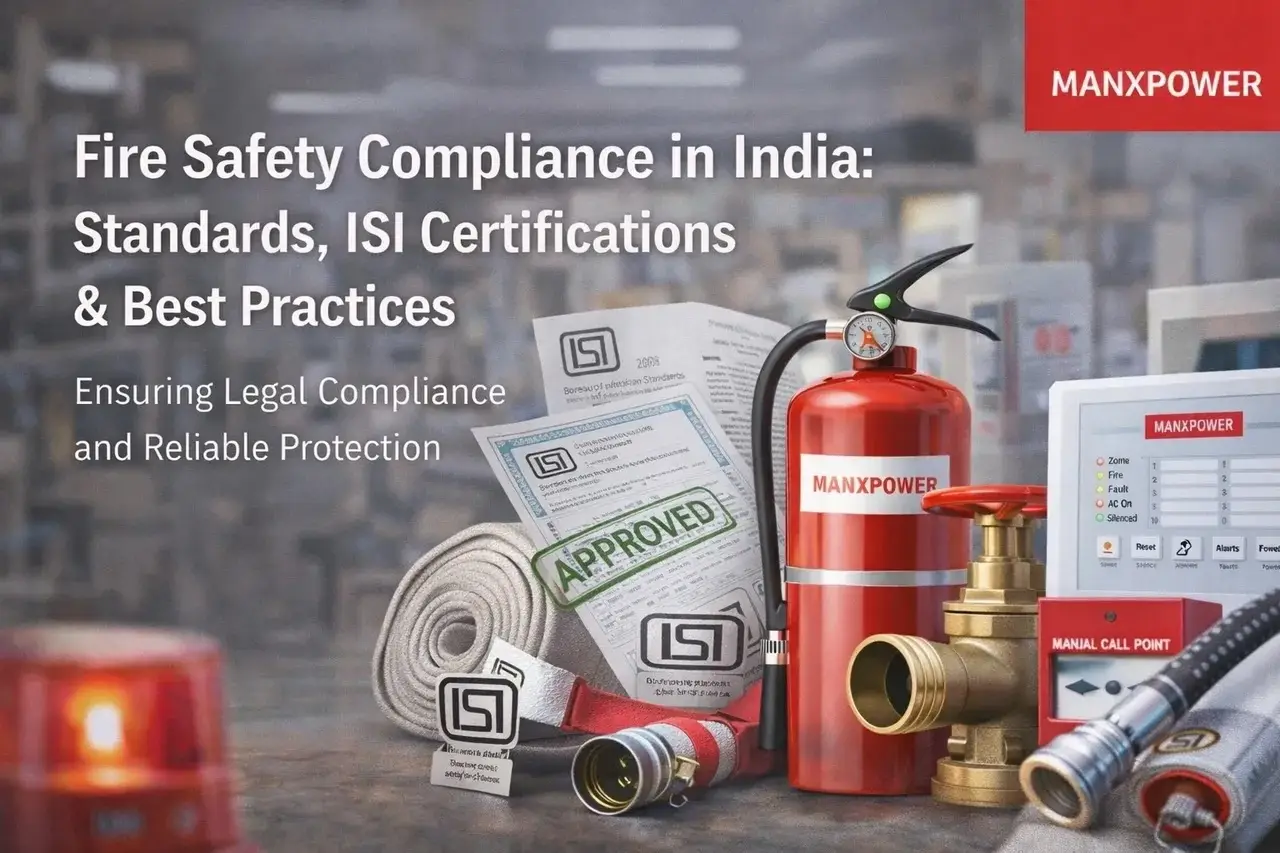
ISI certification means a product complies with Indian quality and safety standards defined by BIS (Bureau of Indian Standards). For fire safety equipment, ISI marking ensures reliability, performance, and compliance, which is crucial in emergencies.
Choosing ISI-certified fire equipment is important because:
- It ensures the product meets minimum safety benchmarks
- It supports building compliance during fire NOC approvals
- It increases trust for auditors and safety inspectors
- It ensures better durability and performance under pressure
Common Fire Safety Equipment That Should Be Certified
Here are essential fire safety products that should be certified/standard compliant:
Fire Hoses
Used in hydrant systems and firefighting operations.
Examples include RRL hoses, thermoplastic hoses, canvas hoses.
Fire Extinguishers & Extinguishing Agents
Proper extinguishers should match the fire class:
- ABC powder extinguishers
- CO₂ extinguishers
- Foam extinguishers
Fire Alarm Systems
Conventional fire alarm panels, smoke detectors, heat detectors, manual call points, hooters, and sounders.
Sprinklers & Flexible Hoses
Automatic sprinkler systems should include good quality sprinkler heads and UL-listed flexible sprinkler hoses for reliable installation performance.
Hydrant Valves & Landing Valves
Landing valves, hydrant valves, couplings, and branch pipes must be robust, leak-proof, and compliant to ensure firefighting readiness.
Best Practices for Fire Safety Compliance
Even the best products are ineffective if installation and maintenance are neglected. Here are the best practices every building should follow:
1. Conduct a Fire Risk Assessment
Before installing systems, identify key risk zones:
- Electrical panels
- Storage areas
- Kitchens and fuel zones
- Machinery zones
- High-footfall areas
This helps in selecting the right equipment and layout.
2. Install the Right Fire Protection Systems
A compliant building should have:
- Fire extinguishers at key locations
- Hydrant system (for large facilities)
- Fire alarm & detection system
- Sprinkler system where required
- Emergency exits and signage
3. Maintain Records & Inspection Logs
Compliance is not only about installation—it’s about ongoing readiness.
Maintain:
- Monthly inspection reports
- Annual servicing documentation
- Pressure testing records for hoses
- Fire drill logs
These are often checked during audits.
4. Train Staff & Conduct Fire Drills
Employees and occupants must know:
- How to evacuate
- How to use extinguishers
- How to activate manual call points
- Where emergency exits are located
Fire drills reduce panic and improve response speed.
5. Schedule Periodic Maintenance
Fire safety equipment must be functional at all times.
- Extinguishers: check pressure monthly, service annually
- Hose systems: inspect for leakage, test pressure
- Alarm systems: check detectors and sirens
- Sprinklers: inspect heads, valves, water supply readiness
Why MANXPOWER is a Trusted Choice for Fire Safety Compliance
At MANXPOWER, we offer a complete range of fire safety solutions designed for compliance, durability, and performance across India.
- Certified and standard-compliant equipment
- Fire hoses, hydrants, valves, couplings, branch pipes
- Fire alarm systems, detectors, manual call points, sirens
- Fire extinguishers, agents, and spares
- Fire sprinklers and UL-listed flexible hoses
- Trusted by residential, commercial, and industrial buyers
With MANXPOWER, you don’t just meet compliance—you upgrade your safety standard.
Final Thoughts
Fire safety compliance in India is not a formality—it is a life-saving requirement. By following recognized standards, choosing ISI-certified products, and maintaining equipment regularly, buildings can stay prepared for emergencies and meet legal approval requirements.
Choose certified protection. Choose reliability.
Choose MANXPOWER — because safety should never be compromised.
Contact us at info@manximpex.com